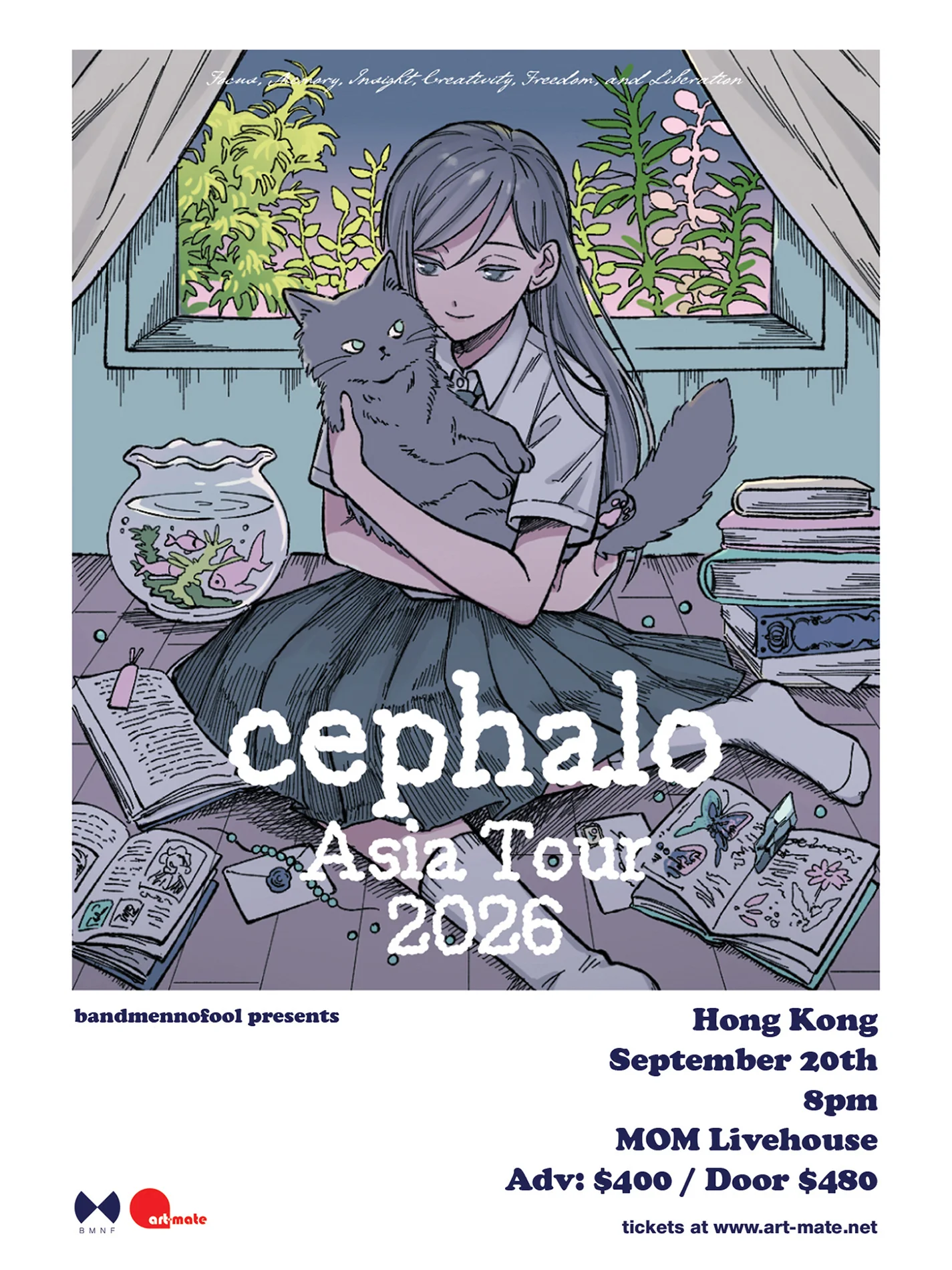
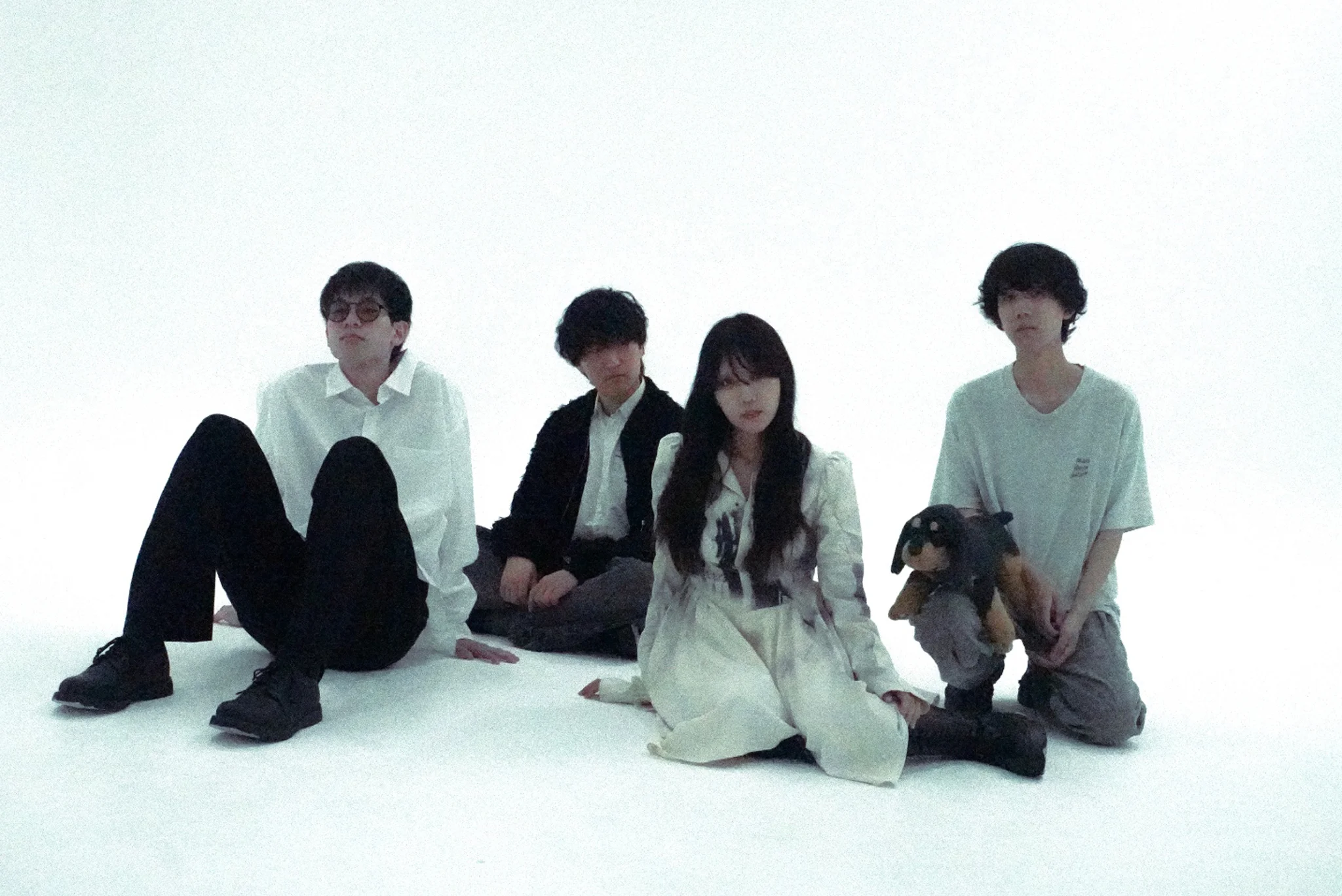
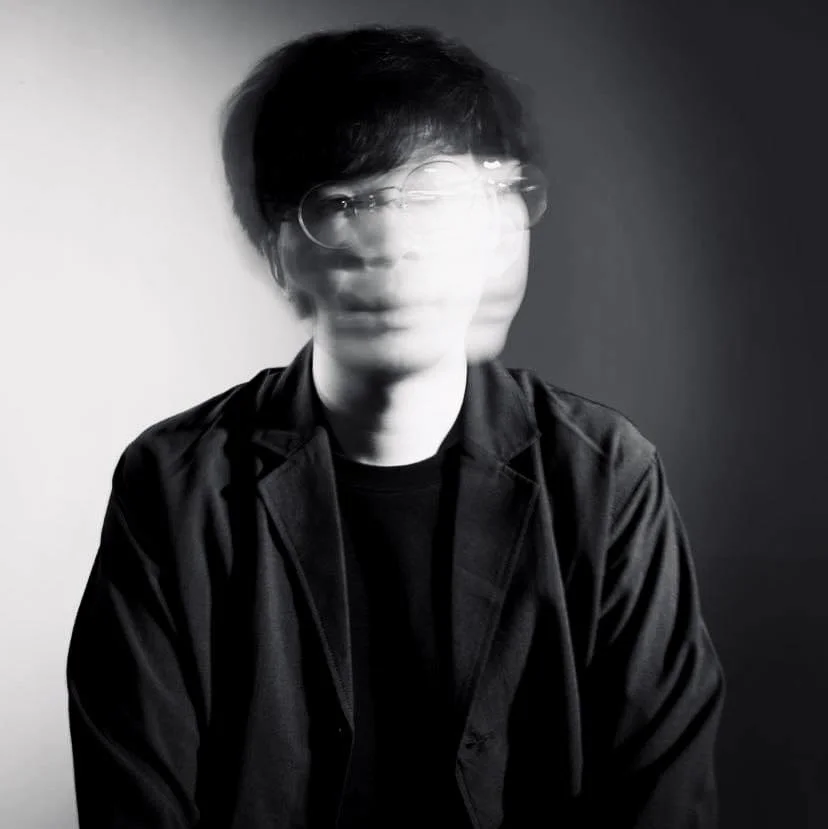
Hailing from Japan, cephalo refuses to be confined by the boundaries of Shoegaze. Guided by an instinctive sense of physicality, they explore a fluid and transparent sound that belongs uniquely to the moment. From wind surfing school and Fluorite code to the short film gloaming point, their work moves between sound, imagery, and colour. Ahead of their first-ever performance in Hong Kong, cephalo spoke with us about their creative concepts, the colours behind their releases, and their impressions of Hong Kong.
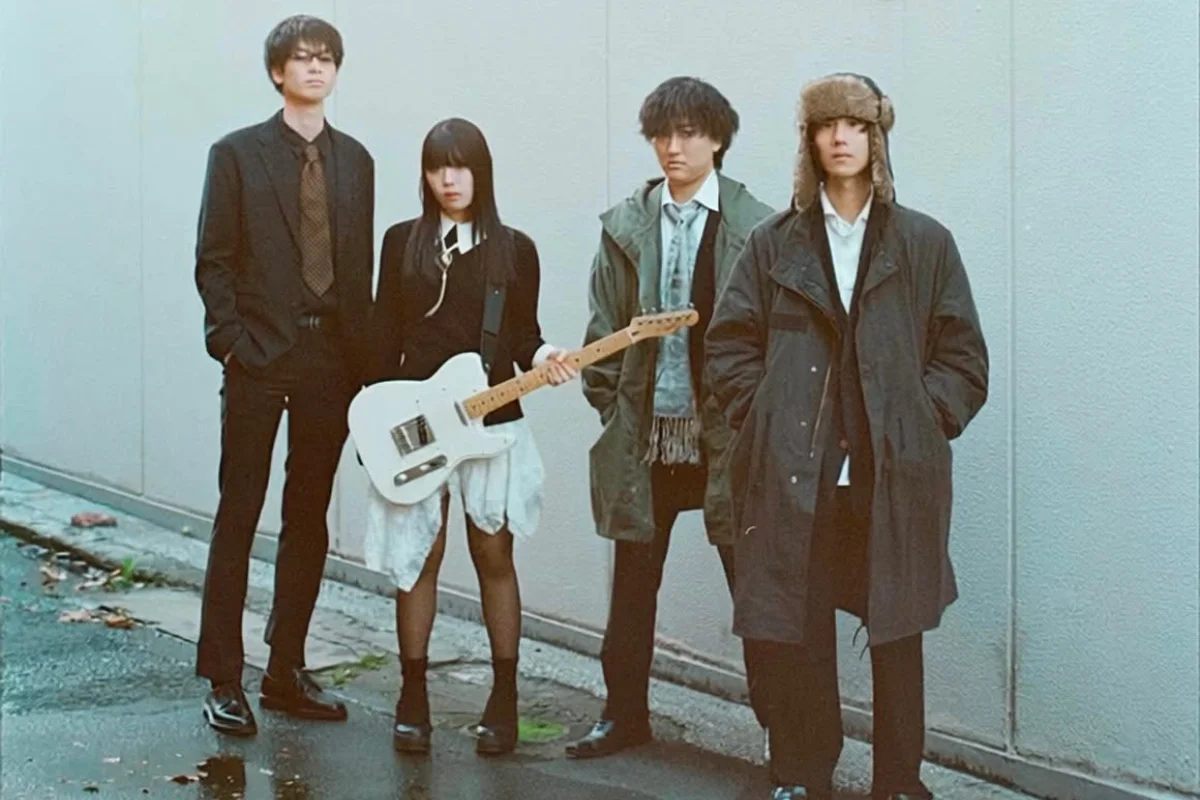
▍Interview|cephalo: A Dreamlike Sound Beyond Definition
1. How was cephalo formed? How did the members first meet, and what brought you together to start creating music?
We met through an online message board for people looking for band members. I went to a fashion school, so I didn’t really have any friends around me who shared my taste in music. That made me decide to look for people online instead.
— fuki
2.All four members are also involved in other bands, including くらげ計画, Rhakka, Loulou Parasom, and iVy. Compared with your respective projects, what do you think makes cephalo unique? How do your different musical backgrounds and creative experiences collide and come together in cephalo’s music?
I think cephalo is a band where we can explore music through the idea of “physicality.” Omae (Gt) and Otaki (Ba) understand the kind of music and songs I want to make at any given moment, even without me having to put it into words. It feels like we are shaping something that can only be created in that particular moment, rather than making music in a one-sided way.
— fuki
3. Compared to the more hazy and distant vocals often associated with traditional Shoegaze, fuki’s voice is remarkably clear, with a strong sense of melody. How do you approach the relationship between the vocals and the layers of guitar? When arranging your songs, how do you find the right distance and balance between the two?
We don’t make music with the specific intention of “making Shoegaze.” So there isn’t any clear rule that says we should deliberately keep the vocals away from the wall of guitars, or, on the contrary, bury them within it.
— fuki
4. Your debut EP, wind surfing school, received considerable attention after its release. The title itself evokes a strong sense of imagery. Is there a particular story, visual image, or creative concept behind the title?
At the time, I often transformed my experiences at school, and things that felt almost like trauma stemming from those experiences, into music. I think the word “school” reflects some of that.
On the other hand, there isn’t any particular story behind the words “wind surfing.” I simply had an image of something blue and somewhat open, like wind or the surface of water.
So rather than deciding on a concept for the entire work from the beginning, it feels more like the sensations and landscapes I had in my mind at the time naturally became a single phrase.
— fuki
5. Looking back, how do you see the evolution from wind surfing school to your debut album, Fluorite code? While making the album, were there any ideas or approaches that you had never tried before but finally wanted to explore this time?
As we worked on Fluorite code, one thing we shared as a band was the desire to bring fuki’s vocals fully to the forefront.
I also think this is the work where our determination to pursue whatever we like, without limiting ourselves to a particular genre, became even stronger.
— Omae
6. Your second EP, gloaming point, extends beyond the music into a short film, allowing the work to develop from a sonic experience into a more complete visual world. What made you want to present the EP in this way? And for you, what exactly is “gloaming point”? What kind of place do you imagine it to be?
I think music and film are closely connected. All of the members love movies, and this time we chose the form of a film as a way to express the images we experienced through sound, as well as the sounds we experienced through images.
We don’t really know what “gloaming point” refers to ourselves, but we would be happy if people could freely interpret it as something ambiguous—the end of evening and the beginning of night.
— Otaki
7. cephalo’s music has always carried a dreamy, transparent, and slightly mysterious quality. If you could describe cephalo’s music as a color, a season, or a place, how would you describe it? And why?
I think the fact that our music cannot be represented by one particular color or place is part of what makes our songs what they are.
At the same time, each of our releases has its own image color, which we reflect in the artwork.
The image colors are blue for wind surfing school, green for Fluorite code, and red for gloaming point.
— Otaki

8. Which bands or musicians have had an important influence on you throughout your creative process? How have those influences gradually been transformed into a sound that is uniquely your own?
In terms of songwriting, I’ve been particularly influenced by sasakure.UK and Ringo Sheena. I also love Clammbon.
I think I’ve been strongly influenced by their literary approach to language, their tendency to take a slightly indirect route rather than stating things outright, and their choice of words that sometimes contain a sense of irony.
Tricot and Domicó were what first drew me toward band-oriented music.
Another thing that I think connects my influences to cephalo’s current sound is how much importance I place on harmony. I played in a wind ensemble, so I’ve always loved the resonance created when different sounds overlap. I’m a huge fan of Philip Sparke’s compositions, and his music is still something like a talisman for me.
I think all of these things—my choice of words, melodies, harmonies, and the way sounds overlap—have gradually seeped into different parts of my musical sensibility and eventually become the music of cephalo.
— fuki
9. What initially drew you to Shoegaze as a core creative language? In your eyes, what is it about the genre that has the greatest power to move people?
I don’t really feel that I, or the other members of the band, are consciously playing Shoegaze. But I think the most beautiful aspect of Shoegaze is having beautiful melodies and vocals existing within a wall of overwhelming sound.
— Omae
10. You are about to perform in Hong Kong for the first time. What are you looking forward to most about this show? And what kind of image or impression do you have of Hong Kong as a city?
First of all, we’re really looking forward to meeting everyone in Hong Kong in person! My image of Hong Kong is a city where traditional and new elements coexist independently while existing side by side. I’m looking forward to visiting for the first time and discovering how the city actually makes me feel.
— Otaki