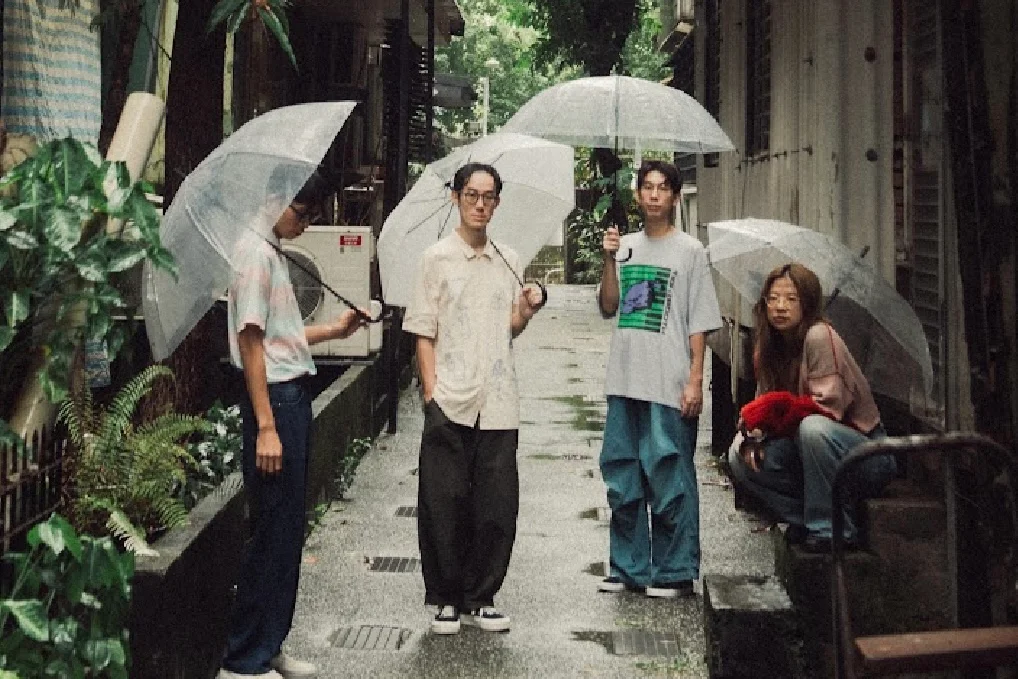
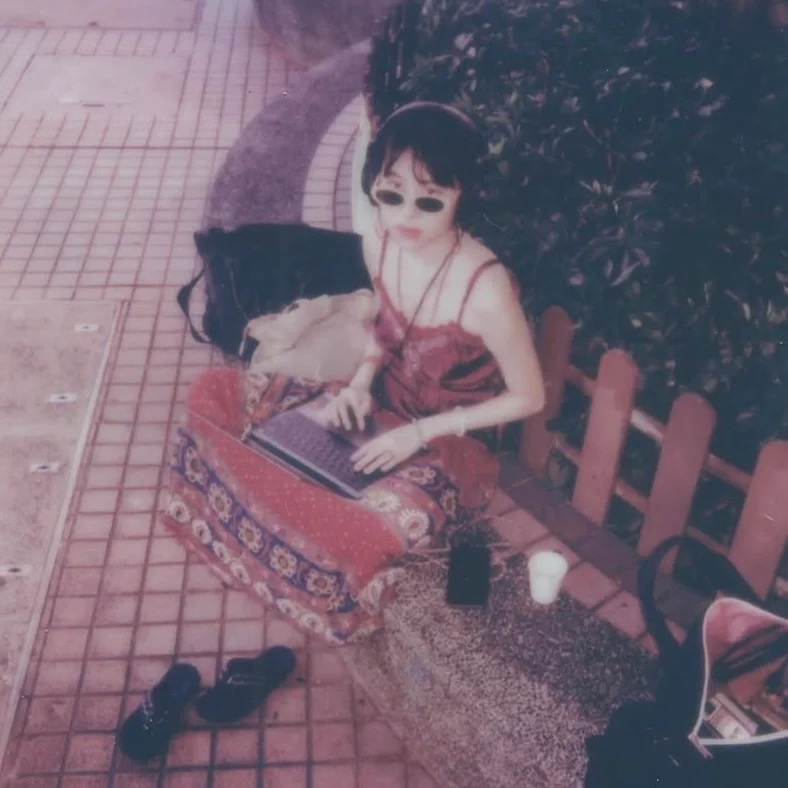
Rice, egg, soy sauce.
Some foods are so simple they barely require explanation, yet somehow always manage to hold you gently in moments of exhaustion, or when there is nothing left to say. Egg yolk on rice is one of those foods. No complicated process, no overwhelming flavour, yet the moment the yolk is stirred into the rice, its richness slowly blending with the warmth of the grains and the saltiness of soy sauce, it becomes a kind of comfort that feels both ordinary and deeply personal.
“We think yolk on rice feels a lot like our music,” says vocalist and guitarist Ami Tseng while describing the band’s latest record. DSPS named their new album yolk on rice because, to them, this bowl of rice resembles the way their music works. The resemblance does not simply lie in ideas like “healing” or “everyday life,” but in a particular sonic texture. Like a deceptively simple dish, its layers only begin to reveal themselves once you truly sit with it.

This sense of everydayness also appears throughout the album’s lyrics, often in the form of small and seemingly insignificant moments. In “Seasonal Allergy,” they sing:
“How have you been lately?”
“Such an impossible question to answer.”
It feels like one of the most familiar greetings among adults. A sentence casually spoken in passing, yet one that quietly carries exhaustion, unresolved emotions, and the vague heaviness of everyday life. DSPS takes these feelings and transforms them into something as intimate and familiar as a home-cooked meal.
// Cooking an Album //
For DSPS, making this album felt less like producing a record and more like preparing a dish.
Guitarist Yung-Hsiang Chan laughs as he explains that, for a while, the band liked to think of their music as a restaurant. Like chefs, they wanted to start from the very beginning of the ingredients themselves. “If you’re making bread, then you start from planting the wheat, grinding the flour, and preparing the sauce.”
Within yolk on rice, this metaphor became unusually concrete.
If previous albums were more about completing a song before entering the studio, this time the band found themselves repeatedly reconsidering the source of every sound ingredient. Should the guitar sit further forward, or wrap around the listener more softly? Should the drums sound cleaner, or retain a rougher texture? Should a vocal line feel close to the ear, or drift slightly deeper into space?
From electric guitar tones to drum textures, to the way spatial depth was built during mixing, DSPS approached every detail with greater precision than before. The result is an album that feels much like a carefully prepared everyday dish: simple on the surface, yet deeply attentive in every layer.
Not an extravagant feast, but a bowl of rice capable of genuinely comforting someone.
// Sound Is Not Numbers, but Images //
This attention to detail also extended into the band’s long-distance collaboration with Japanese mixing engineer Mr. Toshi Kasai.

What fascinated them most was how rarely they communicated through technical instructions or numerical values. Rather than saying “add more reverb here,” “brighten the guitar,” or “raise the drums by 2dB,” they preferred exchanging images and sensations.
“I wanted a guitar tone that feels like sunlight slowly rising over the horizon.”
“I imagined a sense of space moving like ocean tides.”
“At the end of the song, I wanted to hear wind passing by the listener’s ear.”
They would first locate the image, then describe it to Kasai so the sound could gradually move closer to that feeling.
As a result, the guitars no longer function merely as melodic lines, but begin to resemble sunlight, sea breeze, and streets themselves. The drums no longer simply keep rhythm, but gently push entire scenes forward through softly intersecting beats.
Listeners are then guided into this quiet narrative world through the casually recorded “rolling” left at the start of the album’s opening track.
// Care and Understanding //
After more than a decade together, what feels most moving about DSPS is no longer just the delicacy of their sound, but the sense of distance that has emerged between the members with maturity.
The band admits that outside of music, they no longer see each other frequently. Everyone has their own life and rhythm now.
Yet somehow, this distance has made the band more stable. They describe it as a “safe distance.” This feeling had already appeared in “Care and Understanding”:
“The essence of thought should not be language.”
“I can feel you, and I can also feel myself.”
For DSPS, closeness has never simply meant proximity, but rather an understanding that leaves room for one another. Each member maintains their own life while still instinctively knowing when to step back, when to push a sound forward, and where each person’s sensitivities lie.
This kind of understanding was not built through constantly staying together, but slowly shaped over years of making music side by side.
It became especially visible during the recording of “Eyes, Ears, Nose, Mouth, Hands,” the first time all four members recorded live simultaneously, with the vocalist included in the same take.
To them, it felt less like a recording session and more like capturing a relationship.
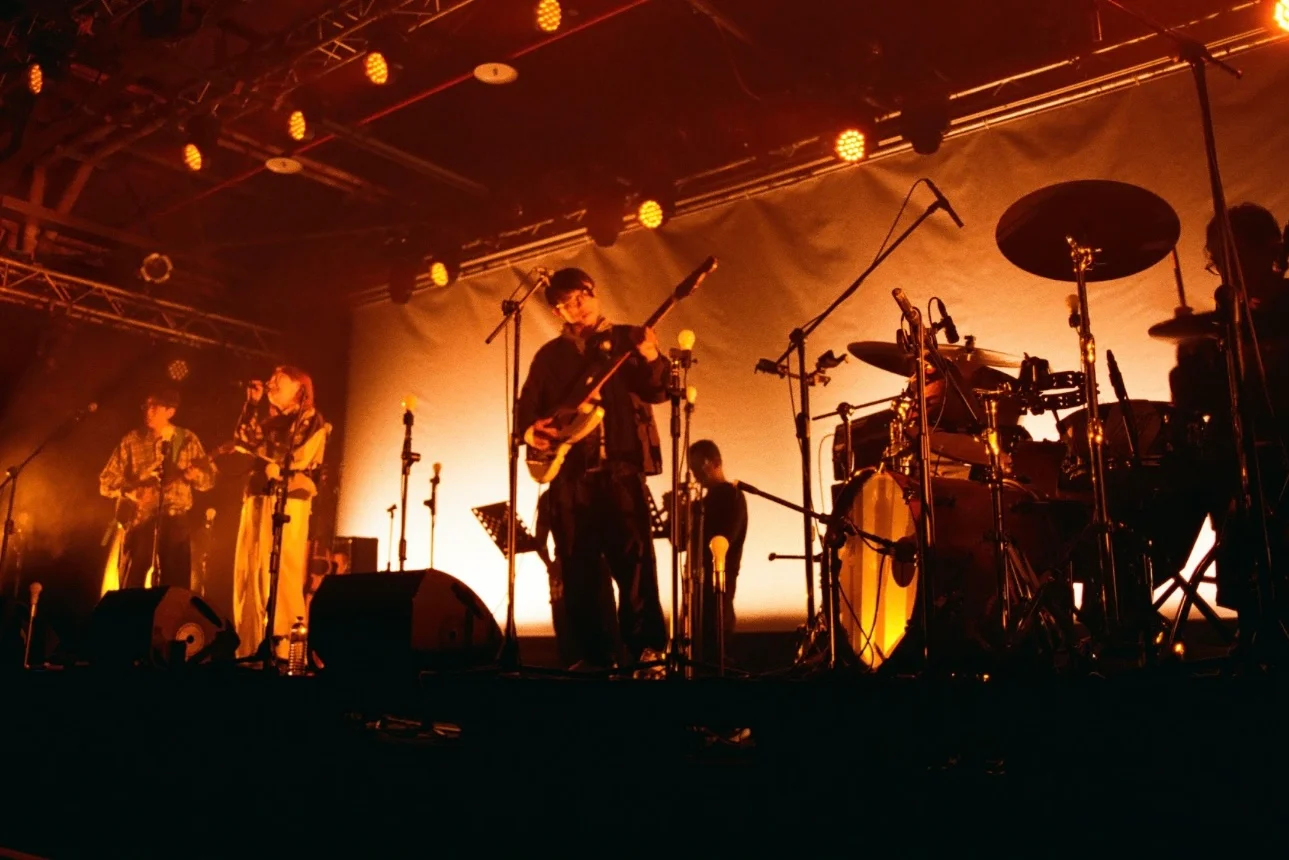
Everyone was speaking, but everyone was listening too. One person moved forward, another naturally pulled back. A rhythm loosened slightly, and another voice instinctively filled the space.
Those moments where the timing was imperfect ended up preserving the band’s chemistry most honestly. It was a kind of breathing that could only happen inside the same room, and it became one of the album’s most precious qualities.
// Speaking in One Voice //
This tour also carries another layer of meaning for DSPS as they return to Hong Kong.
Although the band has performed in the city before, they describe this tour as the first time this current version of DSPS is truly arriving here. I-An Chung and Yung-Hsiang Chan were not part of the earlier Hong Kong shows, making the upcoming performance at Portal feel more like the first complete introduction of the present-day band to Hong Kong audiences.
The members say the band is very different now.
Not simply more mature, but more capable of hearing one another.
“You can hear each of us speaking, yet somehow we’re all speaking in the same voice.”
Each member retains their own texture, but inside the same space, those different sounds slowly blend together into a shared warmth.
Returning once again to the title yolk on rice, what DSPS speaks about has never really been just a bowl of egg yolk rice.
It feels more like a breakfast quietly left inside everyday life.
A breakfast, a gust of wind, a street, an offhand greeting, or one band member sitting beside another in the studio for hours while repeating the same melody again and again. None of these things are dramatic, yet together they form some of the warmest parts of living.
As they sing in “One Day”:
“He said you can rest,
and still leave again whenever you’re ready.”
What DSPS does is take these fragmented moments of everyday life and slowly stir them into sound, leaving listeners to sit with them, little by little, in their own time.