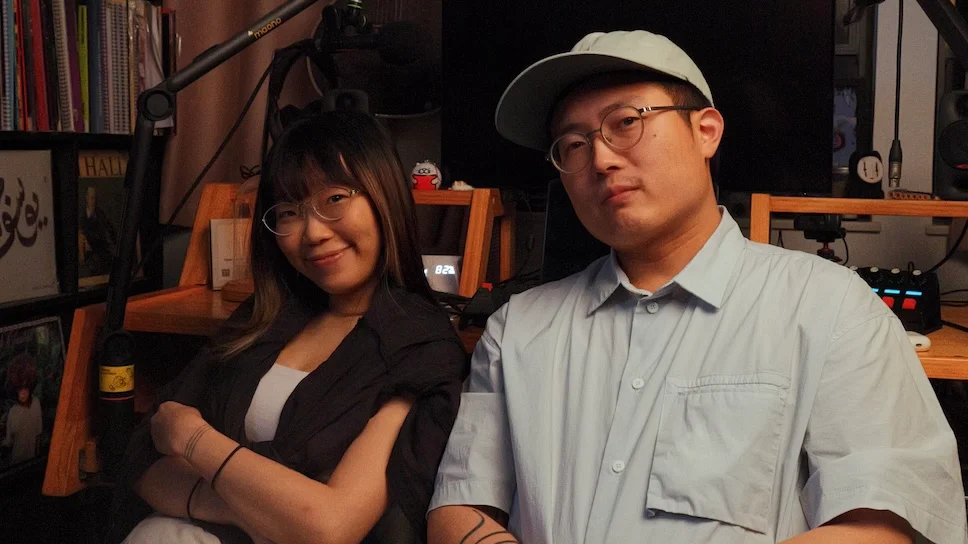
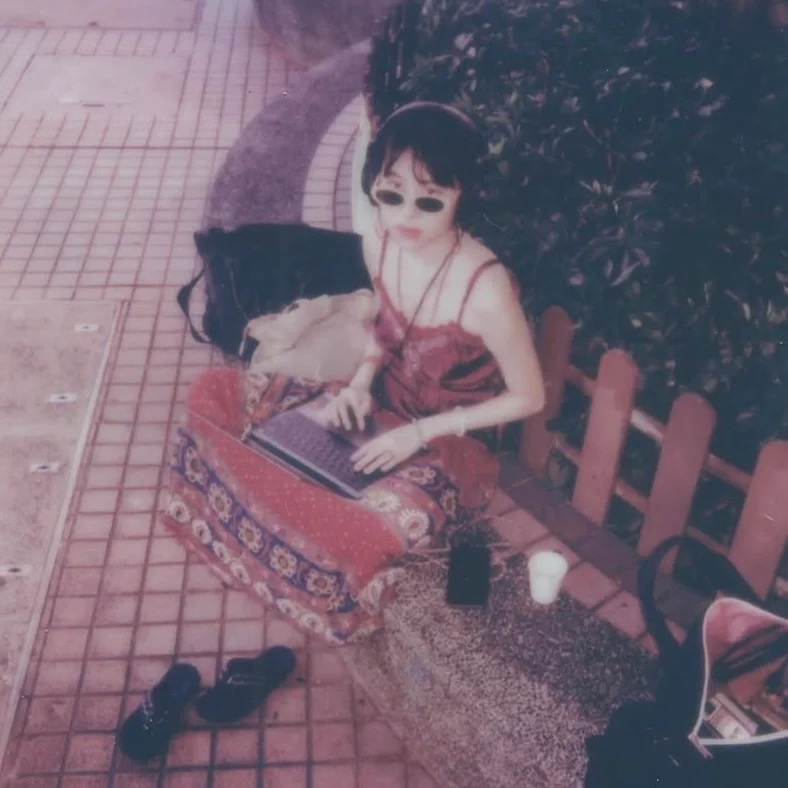
When a musician says they have not felt like picking up the guitar lately, it sounds like a dangerous confession.
Independent singer-songwriter Gwenji describes what she has recently been going through as a kind of “musical impotence”: it is not that she no longer knows how to play, nor that she no longer understands the importance of music, but that she has lost the drive to pick up the guitar that once felt so familiar and intimate. What frustrates her most, she says, is not that she no longer likes it, but the helplessness of not being able to control herself: “Why don’t I like you? I clearly do like you so much.”
She compares this relationship to a marriage. It is like loving someone deeply, only to suddenly wake up one day and not know why the feeling has gone. But that does not mean she wants to leave. She says that even if she does not feel very passionate right now, she will not abandon music.
In this period, she seems to be relearning how to maintain a proper distance from music. Love can draw a person close, but it can also exhaust them at certain moments; taking a temporary step back does not mean giving up. “I believe in it very strongly. I have faith. This is something I will not throw away.”
Sitting beside her is Fengyi, guitarist and vocalist of the band Wantamnam. As he nods along, he begins speaking about “distance” from another direction.
He too once spent a year unable to pick up the guitar because of emotional struggles. During that time away from music, he slowly regained his drive through exercise and a more regular way of living. Now, he has learned how to find a balance with the turbulent emotions inside him. Through forming bands with others, and through organising his voice around outside stories and social events, he does not have to touch too directly the parts inside himself that might easily spiral out of control.
The two actually met more than a decade ago at a creative camp. Those young people from back then have now become independent creators in Hong Kong’s local music scene in their own right. Gwenji moved through bands and duos before arriving at solo songwriting; Fengyi, after living and creating in Taiwan, chose to return to Hong Kong to develop his work. Their paths differ, but they are learning the same lesson: what kind of distance should one keep from music?
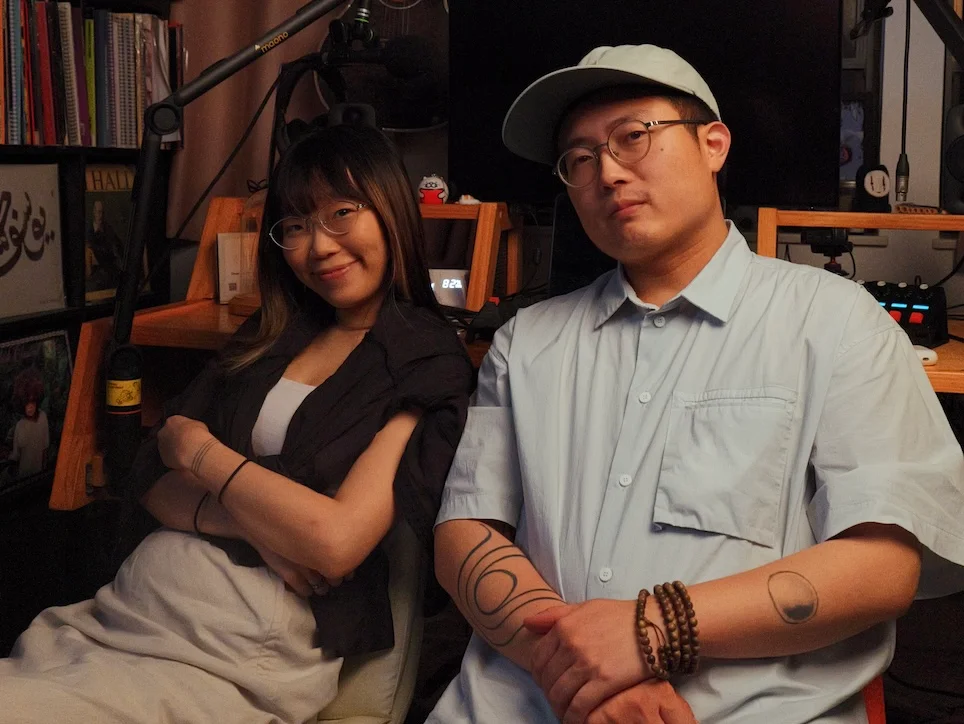
Between drawing close and stepping back, they continue to adjust their relationships with music, the city, creation and life, in order to preserve the strength to keep going.
When Love Becomes Something Difficult to Approach
Gwenji’s music is often described as soft and healing. Her voice is light, but it is not a weightless kind of lightness. Within those almost translucent vocals, there is often a kind of stubbornness, as well as undercurrents of loneliness, anxiety and unease. Her songs do not stand on atmosphere alone. Even with the same acoustic guitar, different works grow into different rhythms, textures, arrangements and chord progressions. Those intricate guitar structures give her softness support, rather than letting it drift. They throw you upward, then catch you again.
When she speaks about her creative state in recent years, there is nothing romantic in her tone.
She says that she used to pick up the guitar very naturally. It was not a task, but a desire that arose on its own. She wanted to play, to push herself further, to put something more layered into her songs. As a singer-songwriter, she did not want only to sing, nor did she want to stay within a few chords. Even if it was only herself and one guitar, she wanted there to be enough sound to hold up an entire stage.
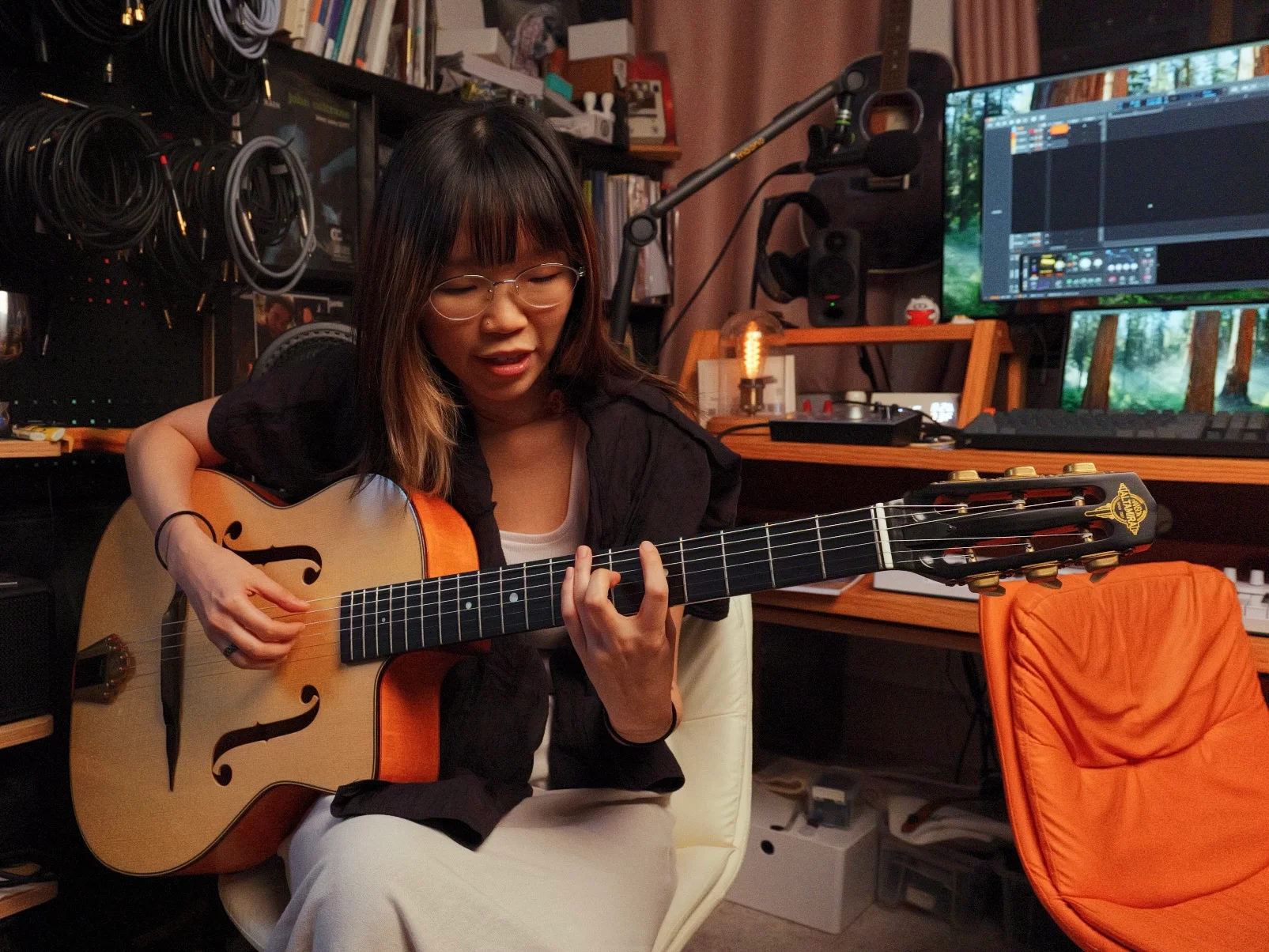
But slowly, that desire began to change. When she picked up the guitar, what she heard was no longer only sound, but self-criticism: Why can’t I break through? Why am I still not good enough? Creation was supposed to bring freedom, but it gradually became a pressure system. At one point, she wondered whether she had fallen into a kind of “musical depression,” a loss of feeling toward music. Something that had once supported her sense of self-worth suddenly became difficult to approach.
This shift was not only personal and emotional; it was also connected to the reality of Hong Kong’s music ecology. Gwenji mentions that, in recent years, she has clearly felt a decline in performance opportunities, a shrinking of music production projects, and a reduction in venues and resources. These are very concrete numbers, and they are also tied to a very concrete sense of security in life. When music had once been able to support part of her income, and that support began to become unstable, she had to return to full-time office work, temporarily placing music back into a less risky position.
“Maybe treat it as a hobby first, and not think of it as a career.” This is not an easy concession, but a musician’s way of re-situating herself within reality. She is not denying everything music has given her; she is acknowledging that it cannot always exist in life in the same form.
For her, as an independent musician, resilience may not mean maintaining one hundred percent passion all the time. It may mean not throwing love away when it loses its original shape. It is no longer the kind of teenage love in which one throws oneself in completely, but a longer-lasting, more realistic form of dedication.
Finding One’s Voice Again Through the Outside World
When Fengyi speaks about Hong Kong, he carries a different kind of energy.
He once lived in Taiwan, creating and performing as part of the band TheJUNK 帆人. At first, there was a lot of fresh stimulation there. Many things made him want to speak, to express. But gradually, life settled into a kind of comfort. That calm was not bad; it could even be called happiness. But for Fengyi, creation sometimes needs friction. When life becomes too smooth, sound loses its point of entry. He describes an undercurrent rolling inside him, constantly pushing him toward change.
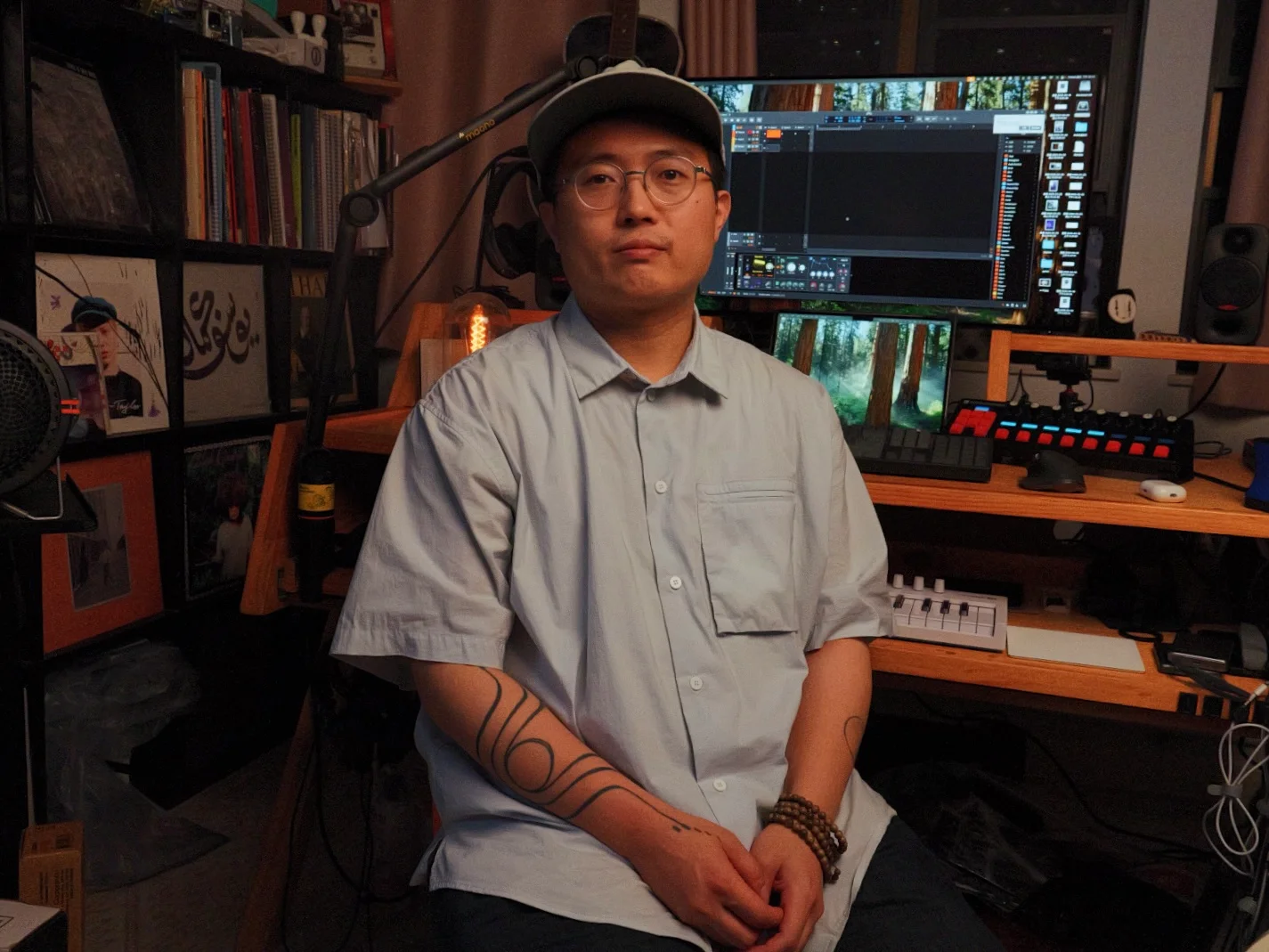
Later, he chose to return to Hong Kong, and once again felt an urgency to speak. The city was full of things in motion. Compared with Taiwan’s more mature independent music scene, Hong Kong’s independent music landscape still contained many unfinished and untried possibilities. He wanted to move beyond existing forms and search for new ways of expression. Hong Kong’s changes, density and possibilities excited him. He went on to form the band Wantamnam, and founded GIGzine, a platform dedicated to narrating local music, continuing to tell the story of this city through a new identity.
Gwenji’s songs usually begin from within: emotions, self-doubt, and feelings in relationships that have not yet been clearly spoken. She says she used to feel that “no matter what the outside world was like, I could still make my songs in my room.” Fengyi, by contrast, needs the outside world to collide with him first. He needs people, events, the city, society, even a certain kind of abnormality, to leave an impact on his body before he brings it back to sediment within himself. He says he must “connect with society, connect with people,” and then return to a more introspective space to slowly think: What are these things? How can I understand them?
This creative method means that he does not directly extract his innermost feelings. Instead, he first borrows a story, a scene, or something that has happened, in order to find a sound for the outside world, and within that sound, to hear where he himself stands. Fengyi used to write poetry; he also filmed, studied philosophy, and came into contact with different forms of expression. When he decided to take music more seriously, he consciously chose to set aside lyrics and words, the medium that had once been more familiar to him, and practise communicating purely through music. For him, sound is not an accessory to language, but another way of thinking.
He became accustomed early on to switching between solo performance and band settings, but he never seriously developed a purely personal project of his own. He says he used to be bad at taking care of himself, always placing what was happening in society, other people’s feelings, and external events before himself. Friends once asked him when he would write his own songs. Only then did he realise that he had always been writing for things, for others, for some external need, but rarely for himself.
But he also knows that if he digs too directly inward, he may not be able to withstand it. Interpreting the city’s stories through a band gives him a structure he can continue working within. He can place personal things inside, but he does not have to expose them nakedly at the very front.
This is also why he values the band as a kind of collective. Sound is not completely controlled by one person; it is generated between several bodies, habits, techniques and reactions. Fengyi says he often thinks about how to make a guitarist “play something that does not sound too much like guitar,” or a drummer “play something that does not sound too much like drums.” He is not asking instruments to complete their prescribed functions, but trying to push them into a stranger position, so that sound can grow into a new shape.
The same city plays different roles for the two musicians. For Fengyi, it is stimulation, a field that allows him to have something to say again. For Gwenji, in recent years it has also become a kind of depletion, drawing away the sense of security and oxygen needed for creation. A city is never merely the background to creation. It can nourish people, and it can consume them; it can offer subject matter, and it can take away conditions.
Sincerity Is Not Only Emotion, but Craft
If the earlier conversation was about how to maintain distance from music, then when it comes to creative methods, they speak of another kind of distance: how not to be led entirely by emotion, but to return to sound itself.
Gwenji brings up one word: “sincerity.”
She is moved by music that has sincerity. Here, sincerity does not mean that emotional abundance is enough, but whether the creator has truly taken care with the sound. She is not satisfied with simply strumming a few chords, nor with merely pouring out emotion. Even though she often says that she is not very technical and works more by feel, she in fact cares deeply about craft. Guitar rhythms, arrangement details, and the way sound drives a song forward are all important to how she judges whether a song holds together.
Fengyi speaks about technique from another angle. He respects technique, but what he cares about more is how sound can begin from one’s own perspective, rather than becoming a copy of an existing style. He brings up a martial-arts-like metaphor: moving from white belt toward black belt, “but the real way may be that after reaching black belt, you move back toward white belt.” Technique must be trained into the body, but one must also learn, at a certain point, to forget those habits. Because for creators, the point is not simply to learn a style until one can imitate it well; it is to absorb it, and then express it in one’s own way.
He finally condenses this into three things: “honesty, starting from one’s own perspective, and the honing of craft.” The balance between these three, he says, is the most difficult and also the most enjoyable part of art.
Resilience, then, is not only a psychological state. It is also a patience of craft: a continual willingness to return to sound itself, to refine slowly, listen slowly, and slowly find one’s relationship with music again.
Between Drawing Close and Stepping Back
Toward the end of the interview, they return once again to “distance.”
For Gwenji, maintaining distance is a life lesson. She used to be too immersed, too prone to turning music into the best and most important thing in her life, even tying it to her sense of self-worth. But artistic creation is not only subjective and romantic. It also requires reason, balance, and the ability, when one really wants to give up, when one is angry or completely worn down, to pull oneself back into a more stable position.
Fengyi faces another kind of difficulty. What he has to manage is not only his relationship with music, but also his relationships with others, with the band, and with creation itself. He knows that he is someone with strong views, and someone very willing to discuss them, but not everyone’s edges fit with his. A band gives him safety, but it also requires him to learn how to coexist with the shapes of others.
They may seem to stand in different positions, but in the end, both are dealing with the same thing: how not to be exhausted by what one loves, and yet not leave it behind. How to keep walking, firmly.
To make independent music in Hong Kong may never have been only about resisting reality. It is also about constantly recalibrating oneself within reality: when to draw close, when to step back; when to treat music as life itself, and when to let it be a guitar that can be temporarily set down.
For Fengyi and Gwenji, resilience is not a slogan about gritting one’s teeth and holding on. Nor is it about romanticising scarce resources as the fate of independent musicians.
On the evening of 20 May, in between conversation and music, they will speak about how, in a city that both nourishes and depletes, one can maintain an honest and elastic distance from music.