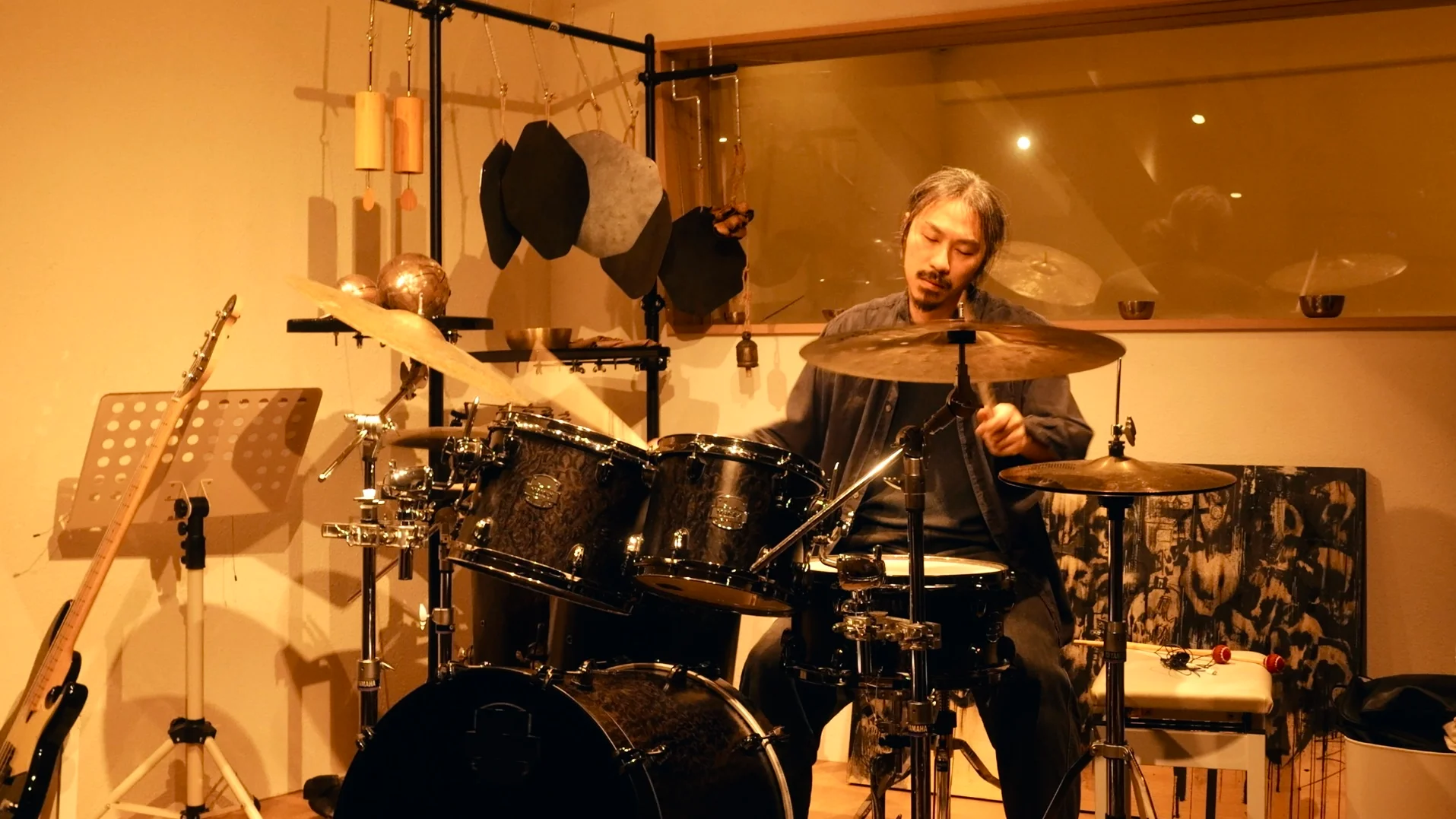
Have you ever imagined a world of complete silence?
There was once an acoustic experiment conducted inside the anechoic chamber at Orfield Laboratories in Minnesota. Researchers placed participants inside a space where sound was almost entirely absorbed. No echoes. No external noise. After a few minutes, you begin hearing your own body: your heartbeat, your breathing, the movement of blood through your veins. Perception starts turning inwards. Spatial orientation starts to collapse. Stay longer, and dizziness and discomfort will begin to emerge.
When external sound disappears, people are forced to confront themselves. Without distance or buffering, we begin to realise that we have always been using sound to escape from ourselves. And the city is precisely such a mechanism with sounds constantly generated, layered, and overwritten, leaving no room to pause, and no need to truly listen. So while we believe we are listening, we are often merely being pushed forward by sound.
The “Silence” in Life Was All Silence does not refer to this kind of muteness. What they preserve is a form of emptiness in which sound still remains. Through sound, people listen to the world; through silence, they begin listening to themselves.
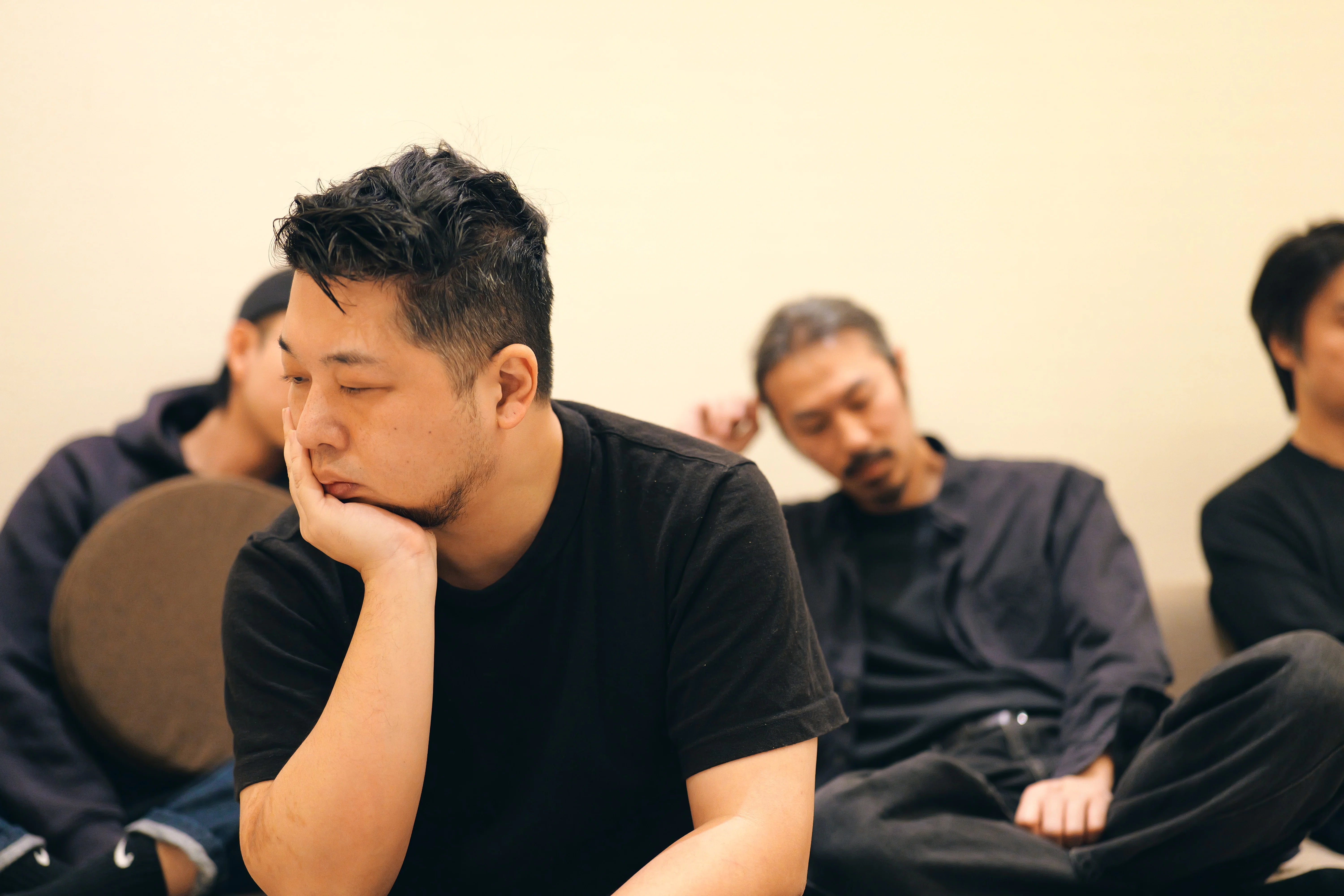
I. When Sound Is Everywhere, Music Chooses to Step Back
The roar of trains entering stations, fragmented conversations, echoes ricocheting between buildings — in a dense city like Hong Kong, sound is not merely an environment, but an invisible machine. It operates continuously, overlapping and accumulating, occupying the senses until listening itself becomes passive. We no longer choose what to hear; we simply endure the flow of sound.
Life Was All Silence’s response is to pull music backwards, rearranging the relationship between sound and time. The band’s name is sampled from a sentence in Italian artist Luigi Russolo’s Futurist manifesto The Art of Noises: “Ancient life was all silence.” It evokes a world before industrial noise, where only streams and birdsong existed. It was a time of an undisturbed natural rhythm. Yet for them, Silence is not a return to the past, but a state that remains unnamed.
Within these elongated spaces of absence, sound no longer rushes to communicate. Instead, it is delayed and stretched between tracks and rhythms, gradually forming a narrative.
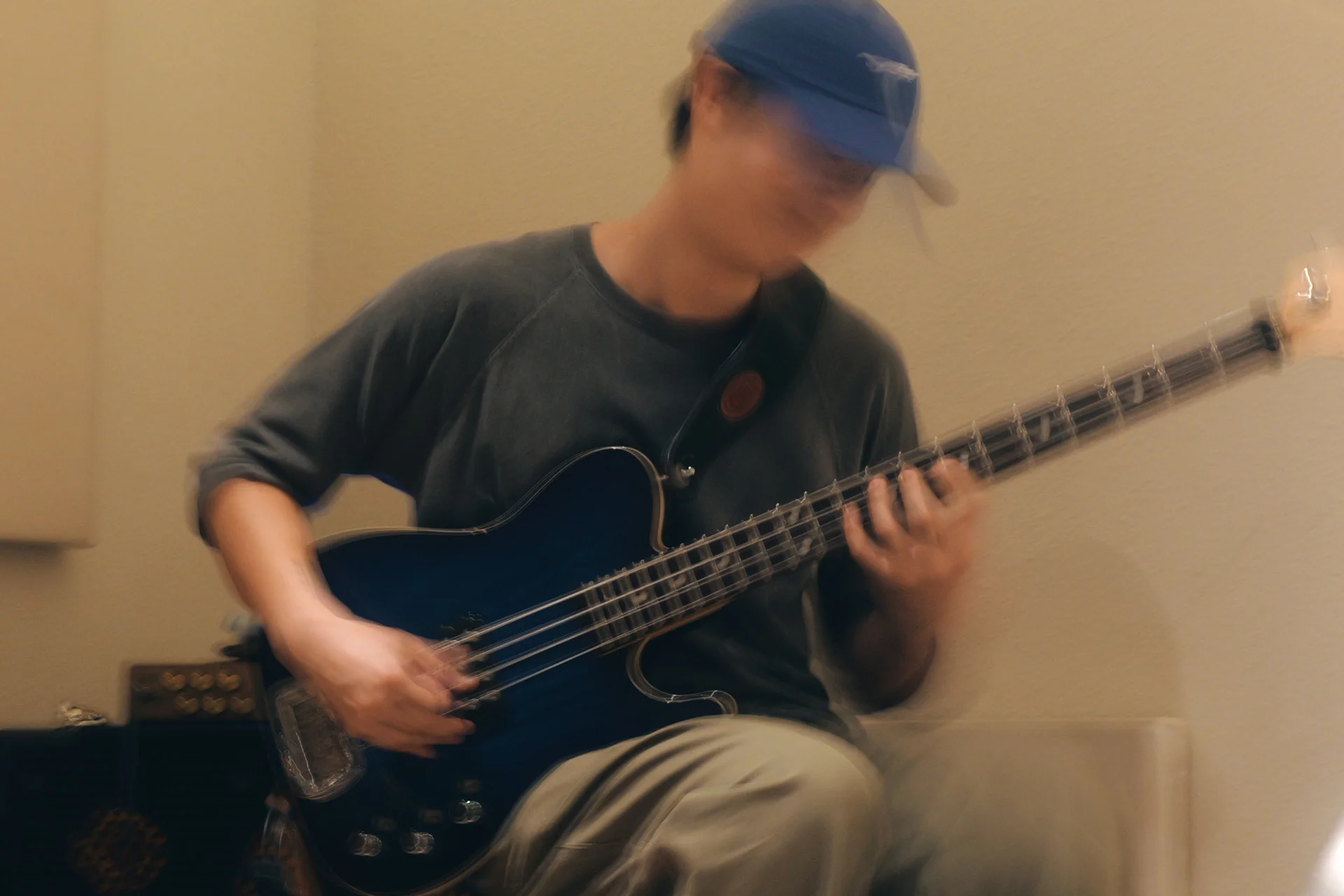
As bassist Leaf puts it: “You can’t make music without meaning. Everything has to have a story to tell.” But these stories do not unfold through languages.
II. The People : Stories Told Through Silence
Released in 2014, their debut album The People (《眾》) does not tell a singular, coherent story. Instead, each track presents fragments that resist resolution, whether it’s the echoes of the Syrian civil war, the accelerated rhythms of the city subway, the gentle narration of Fairytale spoken by a young French girl to her mother.
“It’s all about people, cities, and the human condition,” drummer Travis says of the album. These sounds do not follow a linear relationship, yet they coexist within the same field. Rather than storytelling in the conventional sense, the album allows different states of “being human” to be heard simultaneously.
Human Traffic is perhaps the clearest example. Carrying a recorder through the city, Leaf captured urban life directly as it unfolded, embedding the surrounding crowd, movement, and immediacy of the moment into the work itself.
The album’s opening track is thirty minutes of “silence.” Someone unfamiliar with the record might assume their speakers have malfunctioned. Yet the track was fully processed during mastering; if listened to carefully, faint traces of electrical current can still be heard moving beneath the surface. It contains no conventional content, preserving only the passage of time itself. Together with the remaining tracks, those thirty minutes fill the exact duration of a CD — functioning as a deliberate expanse of emptiness.
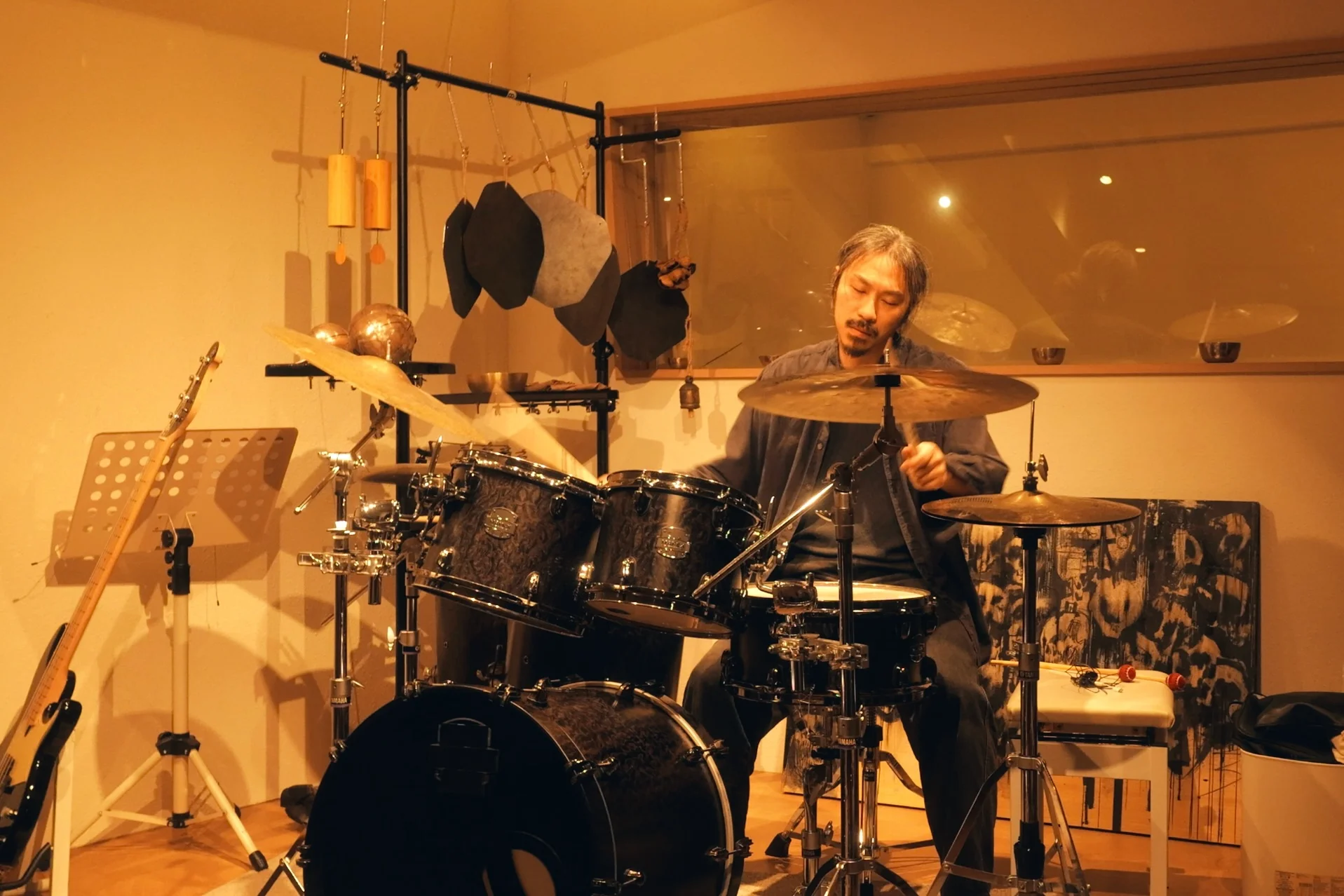
III. Sound Is Not Written — It Emerges in Space
“Our music is created through collision.”
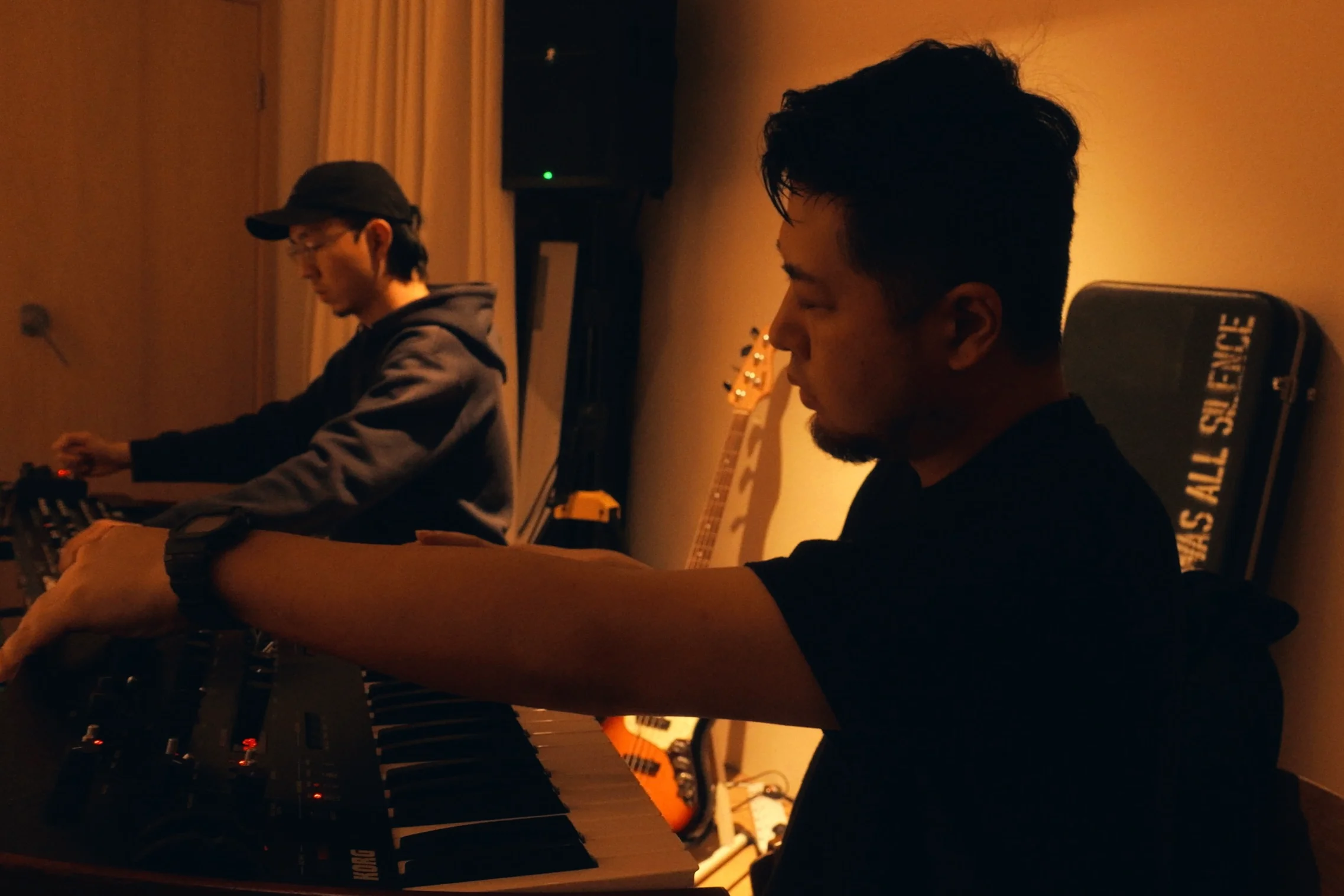
For the band, music is not something fully pre-composed. It emerges gradually during rehearsal, as sounds probe, respond to, and push against one another until a temporary order begins to form.
“I might only play two notes, but those sounds become the song,” guitarist Jay adds.
Rather than prioritising melody or technicality, they focus on texture, tone, and density. The way sound enters, lingers, and dissolves becomes the emotional core of the work — and ultimately forms a narrative language unique to them.
The members’ individual listening backgrounds, ranging from jazz, industrial rock, metal, to ambient, intersect throughout the music without being separated or fully unified, coexisting within the same sonic structure. This approach makes them difficult to categorise. Though they are often placed within post-rock genre, they feel closer to an experimental practice centred on sound itself.
At times, a bassline or synthesiser motif drives the momentum of an entire piece. The band imposes no fixed hierarchy upon the sounds involved, allowing them instead to collide freely. Moments that shift from near silence into eruption are not merely emotional crescendos, but changes in sonic density. They continuously delay the arrival of sound, allowing it to sink and accumulate within space until it acquires physical weight.
Here, music is not linear. It is spatial.
IV. Relearning How to Listen in an Overactive City
In a city where silence is almost impossible, this kind of creation feels unusually slow. Yet perhaps that is precisely why silence becomes necessary.
Rather than competing against the city’s overwhelming noise, their music withdraws. It makes room for space to reappear — a space people can step into. This is not escapism, but a reorganisation of perception itself, reminding us that something still exists beyond noise.
We understand the world through sound. But perhaps we also need silence in order to hear ourselves again. That remains one of the recurring impulses within their work.
V. Entering the Space Between Sound and Silence
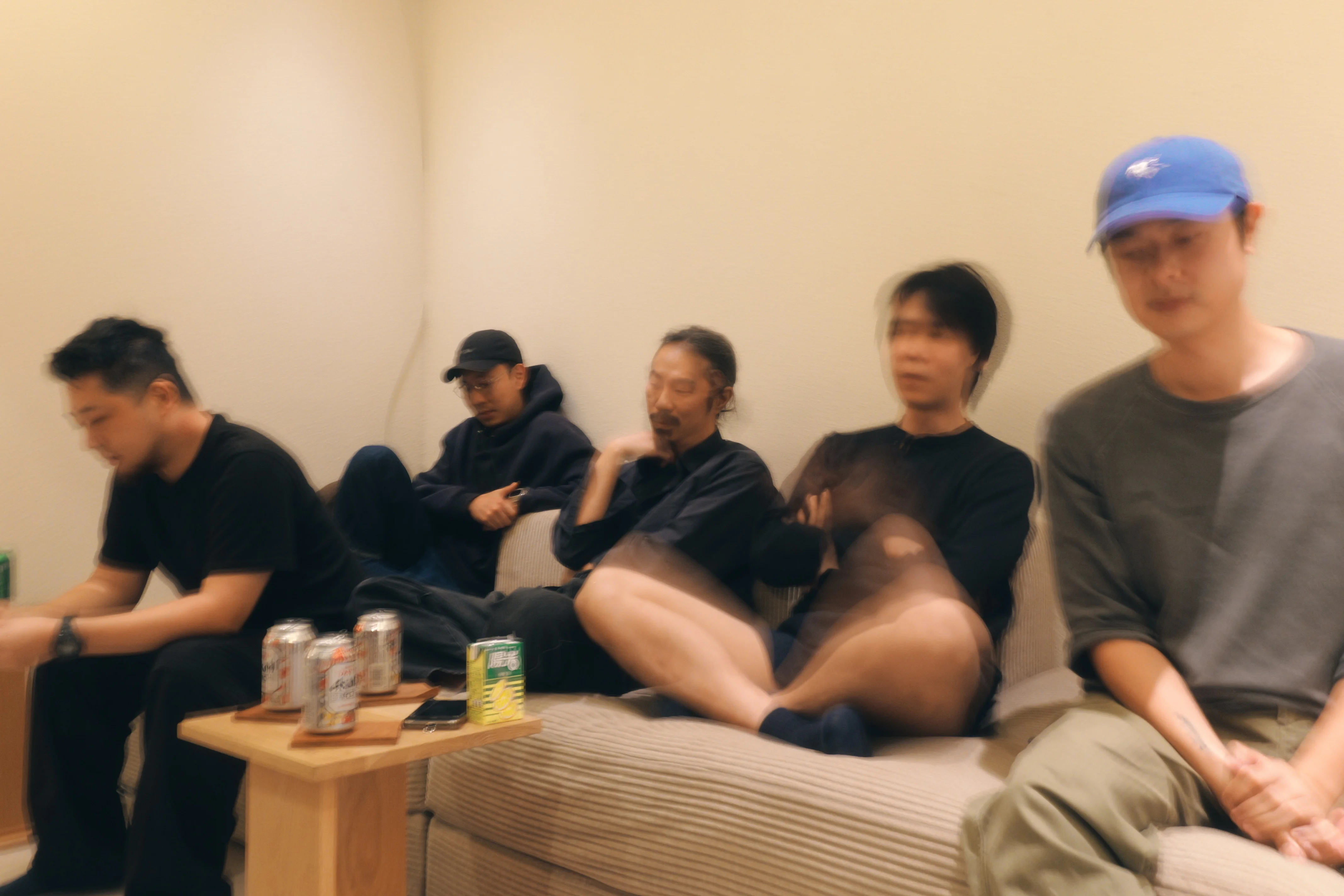
This drifting state between sound and silence is perhaps something that can only be fully experienced live.
Life Was All Silence will soon perform at múm Live in Hong Kong 2026 alongside Icelandic band múm. Both groups are known for transforming sound and silence into near weightless spatial experiences.
During the performance, Life Was All Silence will revisit The People (《眾》), reconstructing the same expanses of silence embedded within the original recording. If you are willing to slow down within the city, and listen again within stretched time, that space may begin to emerge once more, waiting to be entered.
Text & Design | Ines
Film & Photography | Fengyi 逢一