Interview|When Hong Kong Neon Reframes German Darkwave: An Indie Journey with Levin Goes Lightly
Updated at: 2026-10-09
Authors: Lance Chan
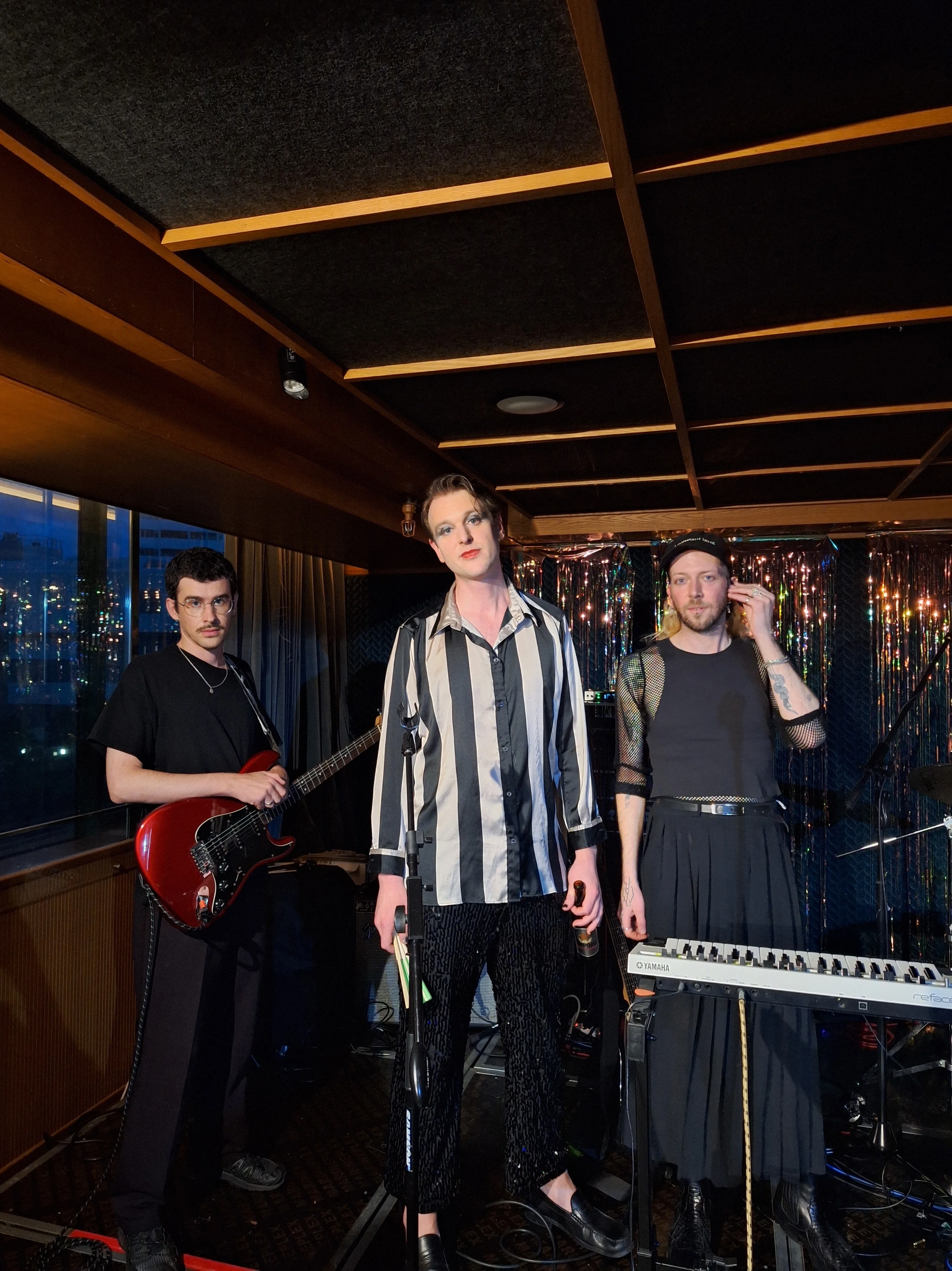
Levin Goes Lightly blends Post-Punk, Dream Pop, and Synthwave. Based in Stuttgart—where he lives in a converted vintage train carriage—the musician has been releasing music since the early 2010s, earning acclaim for his atmospheric melodies and melancholic lyrics. His signature sound features ethereal, haunting vocals, minimalist arrangements, and electronic elements that evoke a surreal, introspective mood.
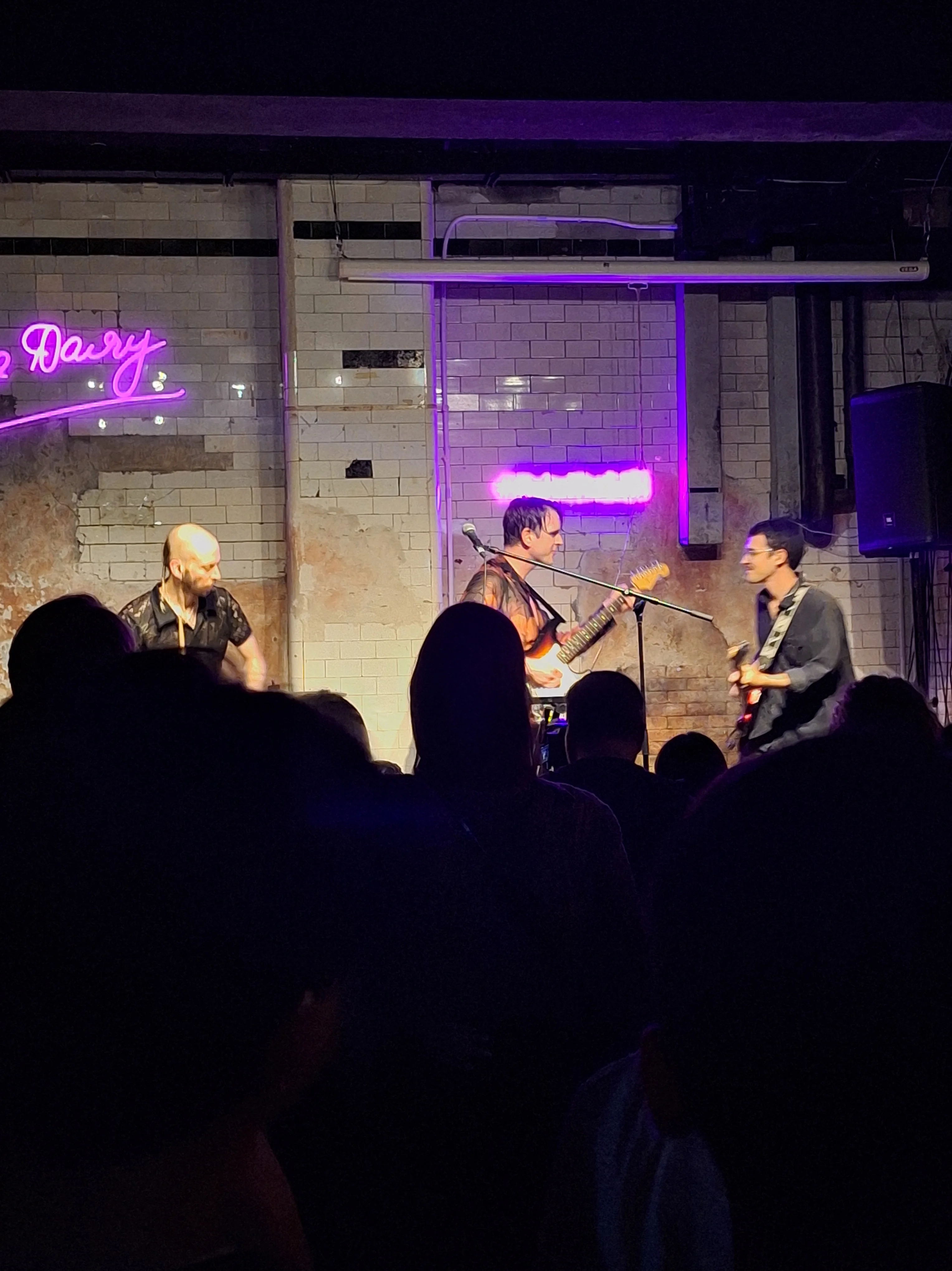
A few months ago, invited by the German Consulate General in Hong Kong, southern German indie musician Levin goes lightly made his debut trip to Asia, performing two live shows at the Hong Kong Fringe Club and Eaton HK. For a city defined by high density, neon-lit grit, and a distinct raw atmosphere, it marked a striking collision of foreign landscapes; for Hong Kong music fans, it became a romantic trans-Eurasian dialogue on queer identity, underground music, and German-language poetry.
Accompanied by his two bandmates, Levin wandered through Yau Ma Tei, Central, and the neon-soaked streets of the late-night city, sitting down with Gigzine for an exclusive interview on his musical journey, cross-cultural impressions, and the subtle explorations between the languages he sings in.
▍Hong Kong Journey & Urban Sensations
Q:I noticed on your Instagram that you’ve been sharing many memories of Hong Kong—from the streetscapes and live gigs to Eaton HK in Yau Ma Tei, which is very supportive of the LGBTQ+ community. As your first collision with an Asian landscape, did the high-density, neon-lit, and gritty atmosphere of Hong Kong trigger any specific sensory impact or inspiration for you?
Levin:Oh, I’ve found so much inspiration here, and I’m definitely going to incorporate a lot of it into my writing—and maybe even into my music. It wasn’t just the city that was inspiring. Hong Kong’s history, the slow pace of change, and the people I’ve met here inspire me deeply. I often think in terms of movie scenes, and then I like to write about them. I experienced everything here as if it were in a movie.
One scene, for example, took place right at the very end. After the lecture at the Goethe-Institut, we went out to eat. It was 2 a.m., and we really stepped into a Hong Kawai movie there. A waiter with an Elvis hairstyle, a bizarre atmosphere, and a woman at the next tab- le who was constantly laughing and telling jokes. She then came over to us and kept calling out “Jimmy”—the waiter—to order things for us. It was like something out of a David Lynch film—or, rather, a Wong Ka wai movie.
At the same time, the stories of some queer people there have already moved me. The thre- at from China continues to grow; that’s sad and frightening. I hope for the best for the people there.
Q:In your US tour diary, you mentioned feeling most at home in queer venues like Cheer Up Char- lies in Texas. During your time in Hong Kong, whether on stage or interacting with the local queer community, did you feel a similar sense of safe, warm, and universal connection that transcends geographical boundaries?
Levin:It was our first time in the city—and in Asia in general. So we weren’t expecting anything and would have been happy if just a few people had come to our shows. But we never expected that the atmosphere would be so great right from our first performance, with people going wild, crying, and cheering us on like that.
We were really surprised that they ended up coming to the second gig and the talk as well. We received an incredibly warm welcome and were made to feel right at home. People sent us tips and told us about their favorite places to visit. It was incredible.
Q:To introduce you to Hong Kong readers who are new to your music, we have to travel back over a decade. While traveling through a national park, you made the radical decision to drop out of university and pursue music seriously, which led to the birth of Levin goes lightly. What exactly happened that day that made you decide to leave the conventional path behind?
Levin:It wasn‘t exactly one day. I’d already had my doubts about whether I wanted to keep going the way I had been. The trip only reinforced what I’d already been imagining. The people, their completely different outlook on life, the incredible and vast natural landscape, and the sense of being on my own, all of that set things in motion. I moved into a decommissioned train car, where I started paying less rent and just making music. An 8-track recorder, a laptop, and a free copy of Logic were all I needed to create some lo-fi sound, but that’s all I wanted this time.
Q:Your project‘s name is inspired by the charming Holly Golightly from Breakfast at Tiffany‘s.For you, is this cinematic, androgynous stage persona with its theatrical makeup a „defensive mask“ to escape everyday loneliness and boredom, or does it actually reveal your most naked and authentic self?
Levin:People in Hong Kong have told me that, too. I’m always very surprised by it myself. Apparently, I’m a completely different person in everyday life than I am on stage. On stage, I let go of my re- serve, and with the help of—or through—the makeup, I become a different person who slips into a new role.
I think I have both sides within me. It’s just that I feel more liberated and detached when I’m wearing makeup. But both sides come from me and are a part of me. Just the act of putting on makeup before a show calms me down and helps me mentally prepare for the show. Much like Holly Golightly, Levin Goes Lightly is a fictional character who helps me step into a kind of performance and actually perform.
Q:You’ve been navigating the underground music scene for ten years now. For many outsiders, the stereotype of German indie music is synonymous with „Berlin.“ But as a Bavarian who has long been based in Stuttgart in the south, what kind of unique vitality or character does the Stuttgart music scene possess that Berlin might lack?
Levin:Here in the smaller towns, things can really take off. Networks form, and musicians meet up at the same spots over and over again, where they can connect and make music together. I don’t know what it’s like in Berlin, but here, everyone knows everyone. For me, the conditions here were just great—with the abandoned train cars and a pretty diverse scene. I don’t know if it’s that easy to find something like that in Berlin.
There were some pretty cool little projects here from a lot of crazy and cool people who organize—and have organized—great concerts and events. It was a small scene that we were lucky enough to be a part of.
Q:Are the music scenes very fragmented or different between different federal states in Germany, or even between the former East and West? Having been in it for a decade, how have you seen the German indie scene evolve, and how do you view the current TikTok-driven resurgence of Shoegaze and Post-Punk trends?
Levin:I don‘t think I can say much about that.
Q:Throughout your career, you have switched between English and German several times (English in the early days, full German for albums like Nackt, and a bilingual mix for Numb). When you sit down to write, what is the fundamental difference in your mindset when thinking in English ver- sus thinking in German?
Levin:My goal is usually to create powerful imagery with just a few words. That actually works very well in both languages. The switch to German actually came from a comment by Anton New-combe of Brian Johnstown Massacre, who advised me that I should definitely try writing a song in German and in my native language.
I gave it a try, and it just went really well with the music I was making back then anyway. But I generally sing in English because I just grew up listening to English music.
I also really like a few German-language bands. Aside from Grauzone (Switzerland), Flaco (Austria), and DAF (Germany)—there are very few that I really like. “Kaltes klares Wasser” is, of course, awesome!
Q:You once admitted in an interview that certain lyrics can sound too sentimental or cheesy (kit- schig) when sung in German, whereas English provides a safe, mystical distance. In your latest album Numb, how did you balance this tension—wanting to express vulnerability in your mother tongue without falling into the trap of being “kitschig?“
Levin:„Über Sex kann man nur auf Englisch singen Allzu leicht kann‘s im Deutschen peinlich klingen“ Tocotronic
“You can only sing about sex in English It can sound awkward/embarrassing all too easily in German”
A cool German band wrote that, too—Tocotronic from Hamburg. And I think it sums it all up pret- ty well. The German language is tough and doesn’t just flow easily over music, unlike English. German music is also heavily influenced by Schlager. Hildegard Knef was really good at singing about feelings and combining kitsch with coolness. I try to do that, too.
Q:There is a common prejudice—even among some Germans—that the German language is too harsh and rigid, and that its musicality is somewhat inferior to the fluid nature of English. As a musician who successfully blends German with Post-Punk and Coldwave, do you agree? How do you unearth the unique musical beauty of the German language?
Levin:The German language is harsh and jarring, but it also suits a certain kind of music very well. Take coldwave, for example. The hard beats. The electronic sounds and the darkness. It fits very well. There are incredibly beautiful words in the German language that can have very different meanings in different contexts.
On top of that, because of where I’m from, I have a certain dialect. I roll my R’s, so everything sounds a little harsher and strange to some people. I really like that.
What I don’t like—and what I think works really poorly—is German hip-hop. Especially the stuff from Germany in the ’90s or 2000s. It’s terrible.
Q:In your US tour diary, you made an amusing comparison: American audiences are incredibly wild and enthusiastic (someone even bit your finger on stage), and you joked that „this would never happen in Berlin.“ Now that you‘ve played in Hong Kong, do you feel Hong Kong audien- ces are closer to the reserved, cool nature of Germany, or the expressive warmth of America? Did this Asian experience help heal the creative burnout you felt recently?
Levin:Although our friends from Hong Kong said it’s unusual for a concert in Hong Kong to be that wild, we were really surprised by how amazing the people here are—how much respect they show you, and how much emotion they feel and shared with us. I think our audience that night was special and really, really great. Someone in the audience was crying. I don‘t know why, but he was very moved by our performance. That really touched me. So I want to play here again right away. Please invite us back. We‘ll come right away and want to meet even more people here.