“What kind of band do you think you are?”
“That’s a difficult first question,” Benson said, scratching his head with a laugh. Olivier thought for a moment before answering, “We’re quite messy, and a little unstable. Whatever genre we feel like playing, we play.”
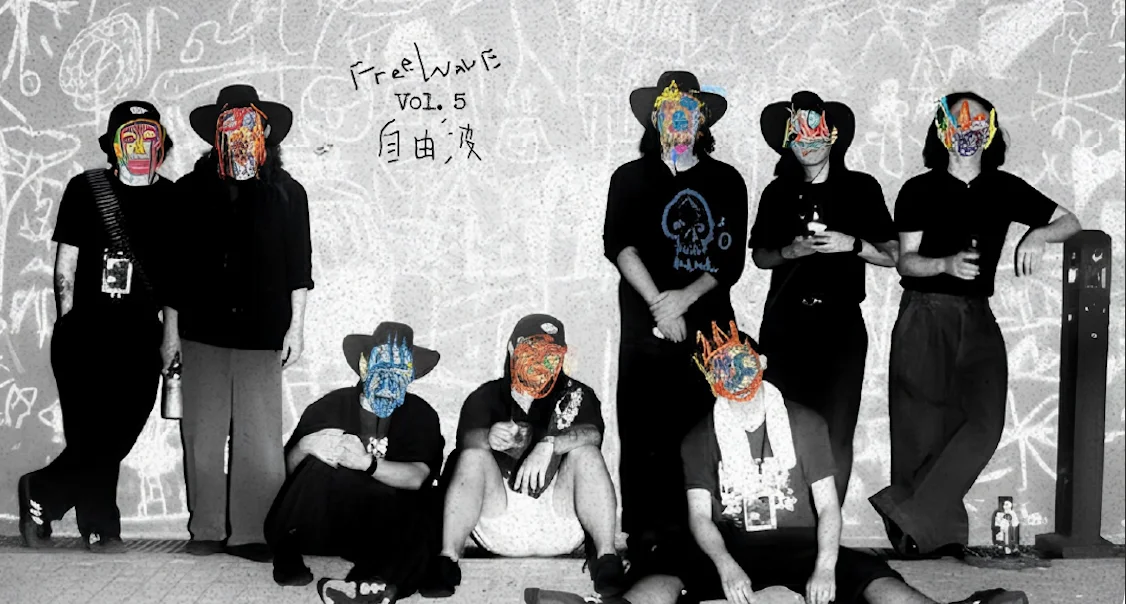
The three artists, whose creative practices span different disciplines, began with the poetry of Hong Kong poet Yam Gong. They have since made an album and played several shows on tour, yet they still have no clear definition of what Midnight Cowboy is. Rather than a band with a conventional structure, they are more like a collective formed by a group of close friends, inviting others over to read poetry or shoot videos whenever they feel like it.
Their approach is to get started and see what happens. They are less concerned with creating towards a specific goal than with whether everyone has had a good time in the process.
When they first began making music together, there were few preconceived ideas. Each had their own particular ideas about sound, yet they were willing to let an idea take shape before anyone had explained it. When Olivier invited Benson to form a band, he was thinking about Benson’s work as a filmmaker and painter. His rapport with Travis, meanwhile, began with an improvised performance that lasted more than an hour, without either of them discussing beforehand what they would play. Benson found it curious that, once the three came together in this band, traces of their individual musical styles seemed to fade, giving rise to something entirely new.
Nor did they sit down to decide what genre Midnight Cowboy should play. A rehearsal might begin with a passage from one of Yam Gong’s poems, or with one person playing a sound and the other two following along. Often, even they have no idea where they are going next.
“Whatever I play, they seem to be fine with it,” Travis said.
A samba rhythm might suddenly come running in; between a solo and a groove, a hymn-like chorus might appear out of nowhere. Even when the singing goes off-key, they carry on, letting the sound wander further into unruly territory.
〈陰謀家〉 contains just such a passage. Benson said the chorus sounded strange to him at first. But when he listened to it again some time later, he was suddenly moved by it.
“If we were really serious about arranging the music, there would probably be hundreds of things we’d rule out from the very beginning.”
▍What to Keep / What to Let Go
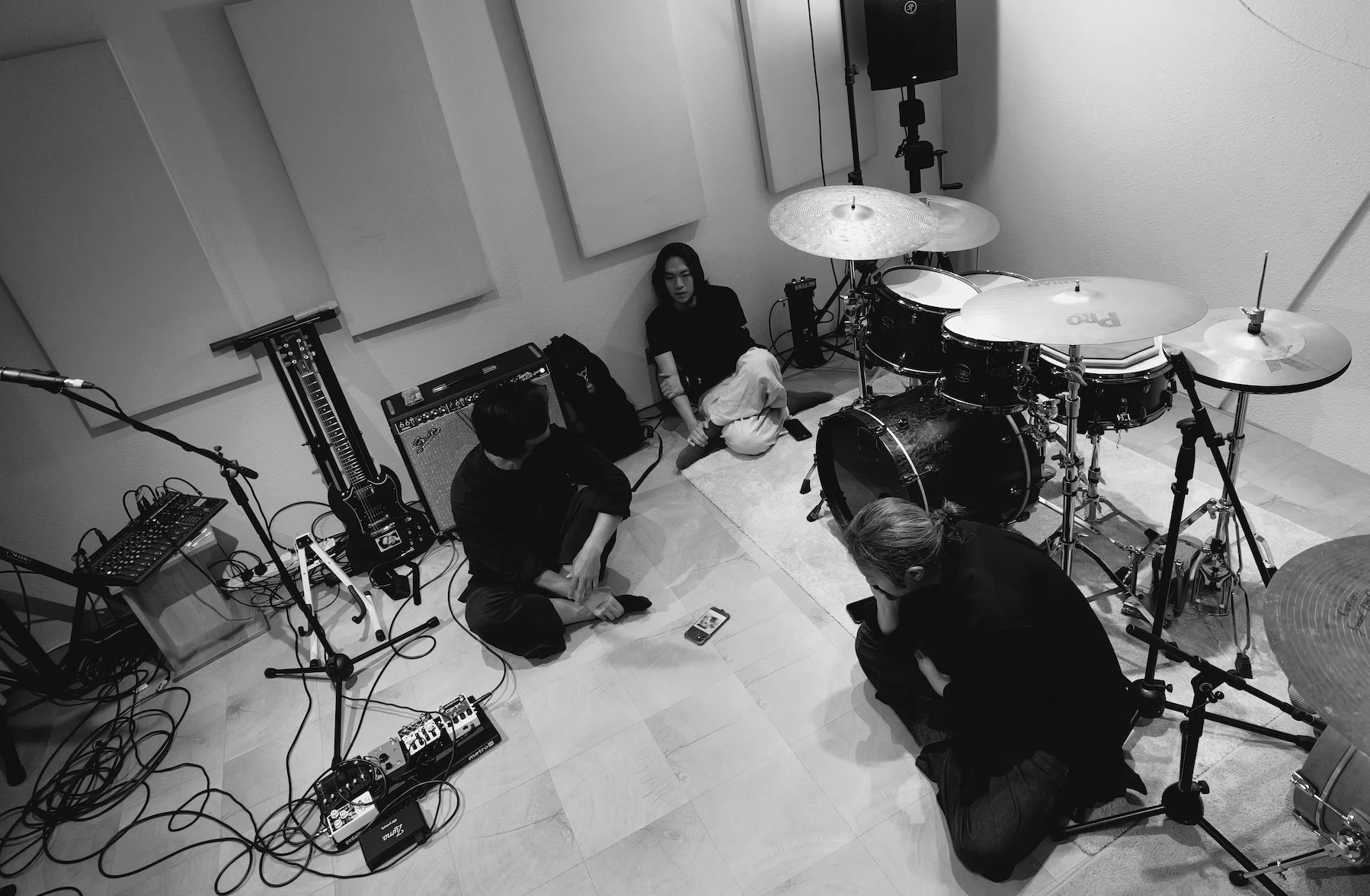
The three wrote a batch of songs over 27 days in the studio where they rehearsed.
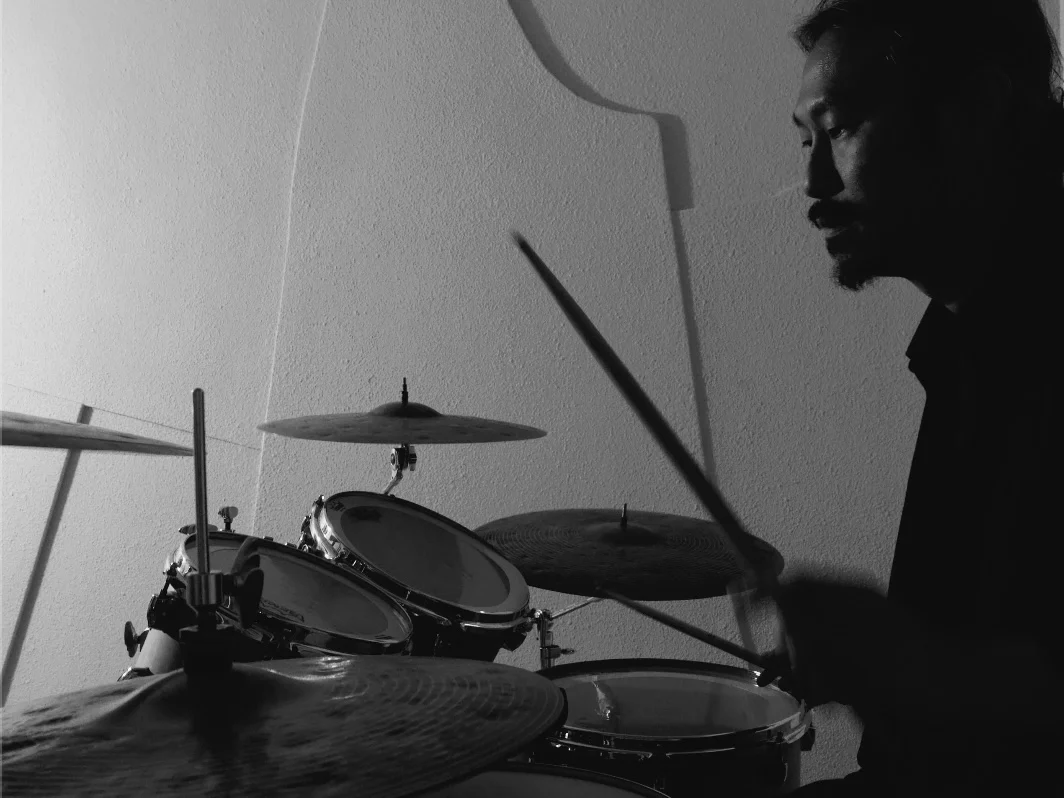
During rehearsals, they made a habit of recording the entire session. At first, the recordings were simply a way to listen back and remember what they had played that day. No one was treating them as finished takes that might eventually be released.
Later, they brought these demos to Avon Studios, hoping to record them again with more comprehensive equipment. They ended up recording for 15 hours straight.
“I am so tired that I almost fell asleep,” Travis said.
But when they listened back, another problem emerged. Avon had more extensive equipment and recording facilities, yet there were songs for which the three still preferred the demos they had made in their rehearsal studio. Some of the rough textures and energy of those early recordings belonged to that particular moment and could not be recreated.
Olivier suggested using the old recordings after all. At first, Travis was reluctant: after spending so much time recording the new versions, were they really going to leave them unused?
In the end, some of those early recordings found their way back onto the album. The final versions of certain songs do not even come from a single performance. 〈蔡一智〉, for instance, brings together audio from a filmed live performance, the formal sessions at Avon, and recordings of jams in their rehearsal studio. The different sources are quietly interwoven within the same track, taking listeners through a succession of spaces.
Each source has its own sonic texture. One passage might have the clean, upfront sound of a professional studio recording; the next might suddenly take us back into the band room, as though we were surrounded by people chanting poetry with near-manic abandon. Other passages are looser. When these recordings are joined together, they are not forcibly kneaded into a single, muddy lump of modelling clay.
Instead, within the same song, a bright texture gives way to something hazier, lending the music a sense of childlike play. Recordings made at different moments retain something of their individual character.
▍Furrowed Brows Slowly Give Way to Smiles
The atmosphere at a Midnight Cowboy show is quite different from that of the music the three made before.
Travis previously played in Life Was All Silence, whose music leans towards experimental rock and post-rock, with rhythms, noise and dynamics often building in layers. Benson’s former band, eli, also draws on alternative rock and post-rock, with a frequently sombre emotional tone. Olivier’s solo work has long carried a darker, more introspective quality, moving from folk and strings to expansive arrangements that rarely venture into lighthearted territory.
As they recalled the audiences at their earlier shows, the three quickly pulled the same face, furrowing their brows in a suddenly comical imitation.
At those shows, people in the audience would often stand with their brows tightly knitted, swaying gently, immersed in dense walls of sound and emotion.
With Midnight Cowboy, things are rather different.
Benson remembered hearing laughter from the audience throughout their Taiwan tour. At one show in Taipei, someone even shouted, “Why does it feel like you guys are here to do comedy?” At certain moments, the three of them could not help laughing onstage too. Looking out, they would see smiling faces and people moving excitedly to the music.
It was a response they had rarely encountered in their previous bands.
Benson also has a habit of questioning his own performances. After a show, he usually feels he has played well. But if there is no recording to listen back to, he soon begins to wonder: was it actually good, or did he just think it was?
This time, the audience’s response was far more immediate. Their smiles and shouts gave him an answer.
▍When One Refuses to Stop, the Other Two Play Along
After several tour stops, the songs began to change too.
Midnight Cowboy do not use a click track onstage. How long a passage lasts, when to move into the next section and when to end all depend on the three watching and listening to one another as they play.
Sometimes they reach a point where a song should clearly end, but one of them simply refuses to stop.
So the other two keep going.
Someone might suddenly introduce a sound that has never appeared there before, and the others will pick it up. A section that was once very short might be stretched out; someone might deliberately alter a familiar rhythm, leaving the other two to find their footing again. The further they went on tour, the more often things like this happened.
“We get bored easily,” Olivier said.
He brought only two effects pedals on tour, but the amplifiers provided at each venue were different: Marshall, Fender and Roland JC. The tone he had dialled in at the first stop might be impossible to reproduce in the next city.
He no longer insisted on recreating exactly the same sound. Whatever amplifier was available that night became his starting point. The venue was different, the three of them were in a different state, and the songs changed with them.
In the studio, they had once spent 15 hours chasing a more beautiful sound. Out on tour, with an effects pedal plugged into an unfamiliar amplifier, all they could do was start playing and see what happened.
▍Poetry and Mischief
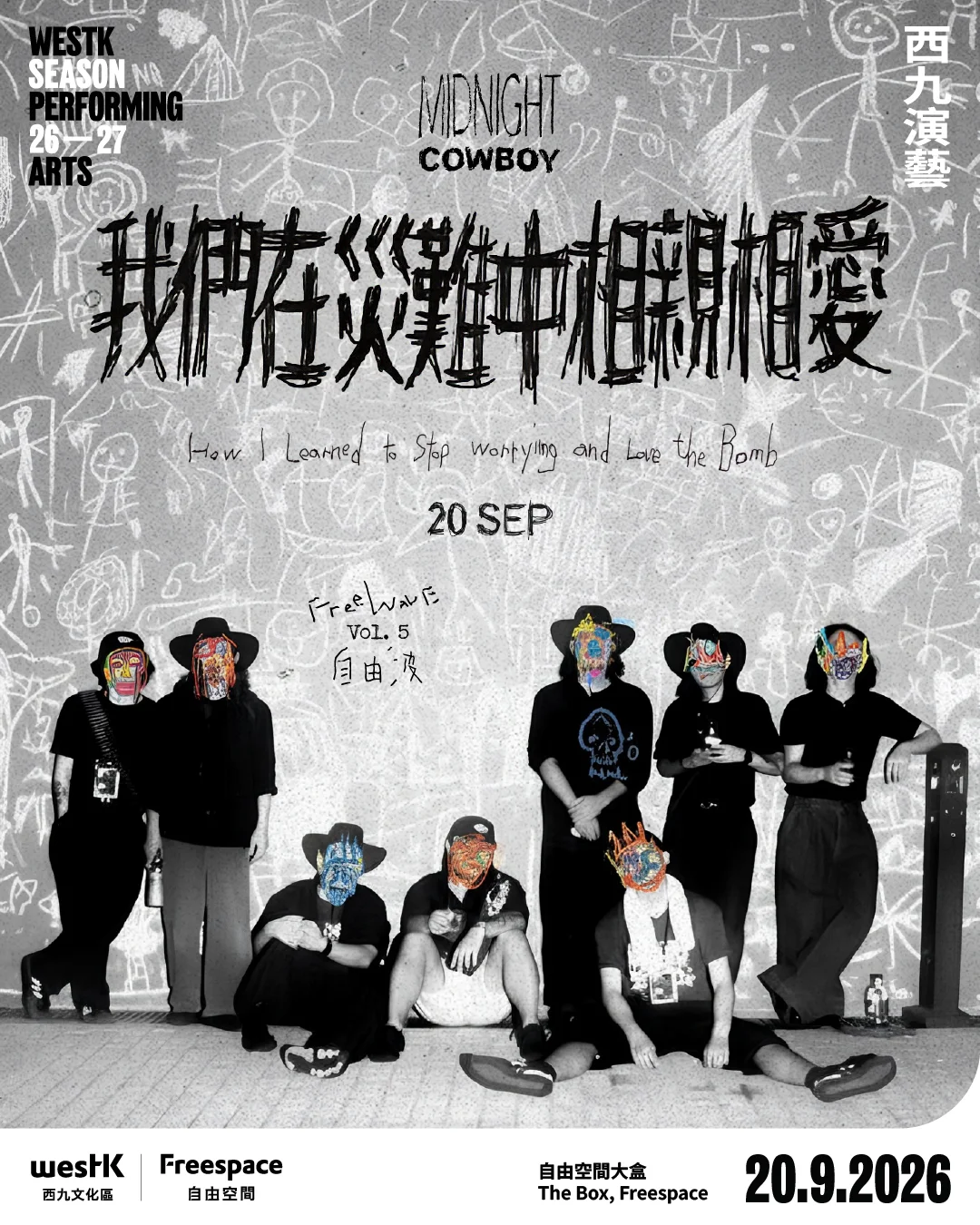
On September 20, Midnight Cowboy will return to Hong Kong to perform at The Box, Freespace, in the West Kowloon Cultural District.
The evening will begin with a documentary screening, followed by a performance of songs from the album and new material. After the show, poets and musicians will join the after-party.
When the conversation turned to these plans, Olivier jokingly called it 「吟詩作歹 (Poetry and Mischief)」, a mischievous twist on the phrase 「吟詩作乐 (Poetry and Play)」.
“That’s a great name,” Benson immediately replied.
The poster had originally said 「吟詩作乐」. As they talked, they casually changed a single character.