Interview|THE NOVEMBERS: The Night the Engines Began to Sing
Updated at: 2026-07-09
Authors: Cen.
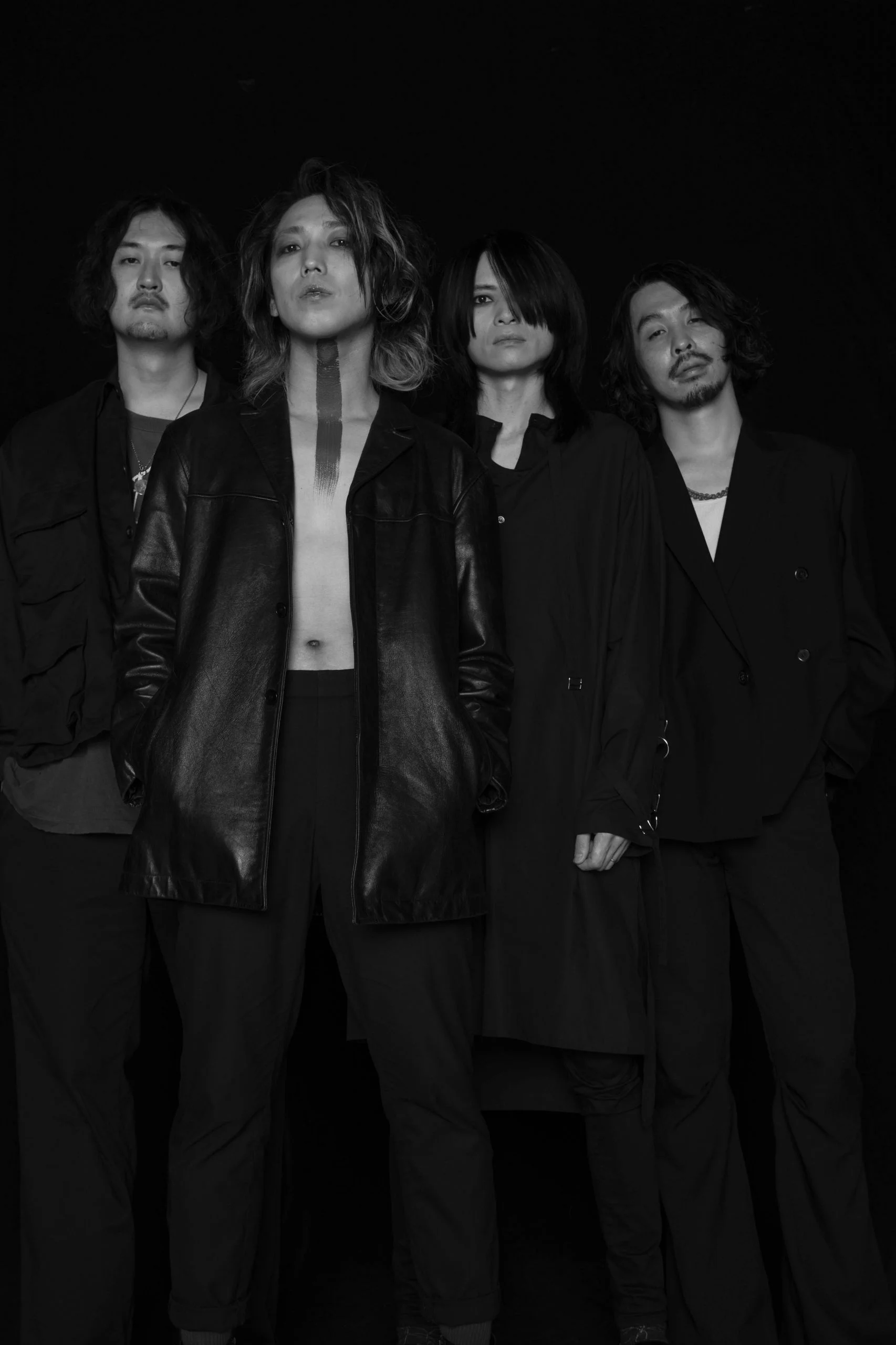
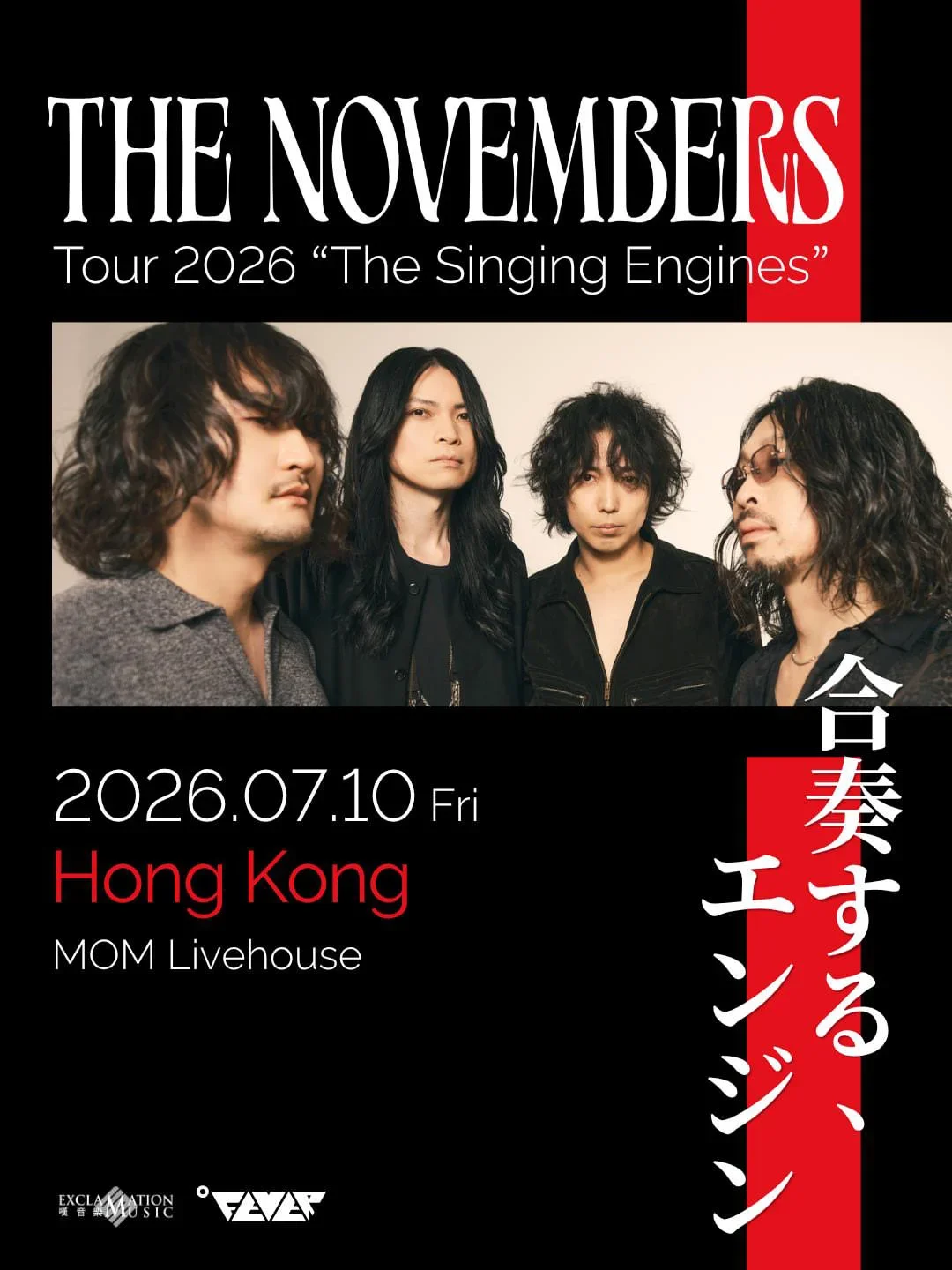
Returning to Hong Kong on 10 July 2026 with their new EP The Singing Engines, THE NOVEMBERS are reflecting on what music can carry: memory, emotional resonance, and the desire to stay connected. Here, Kobayashi Yusuke (Vo. & Gt.), Matsumoto Kengo (Gt.), Takamatsu Hirofumi (Ba.), and Yoshiki Ryousuke (Dr.) open up about their latest EP, their relationship with the city, and the role live performance continues to play in their work.
Q1: You first performed in Hong Kong in 2016, and returned after the pandemic in 2023. Kengo, in particular, spent part of his childhood in Hong Kong. How have your impressions of the city changed over time? And how do the other members feel about Hong Kong now compared to before?
Kobayashi: Whenever I come to Hong Kong, what strikes me every time is the sheer energy that comes from people gathering here — not just the city itself or its history. I truly love that sense of wildness you don’t find in Japan. And the more I learn about the city’s political issues and history, the more vividly I feel the weight of this place’s past.
I think the speed of change is incredibly fast everywhere in the world now. Hong Kong’s cityscape has surely changed somewhat since our last visit as well. Even so, the passion of the people still waiting for music in the live houses hasn’t changed. If anything, maybe that’s part of why we play live — to encounter those things that remain unchanged. For Kengo, this is a city filled with childhood memories, but for me too, it has become a very special place.
Matsumoto: Hong Kong is a place where I spent a large part of my childhood, so it means a lot to me. I’m sure many things have changed since then, but the energy of the people and the city still inspires me just as much. Also, because I was a child back then, being able to drink in Hong Kong now as an adult is, in its own way, a fresh kind of enjoyment for me.
Yoshiki: My impression is that Hong Kong is a place where many different cultures intersect. Every time I visit, I find new inspiration. I really love it there.
Q2: On “HERO” from your latest EP, The Singing Engines, you collaborated with soul/folk singer-songwriter Abe Fuyumi. What made Abe Fuyumi specifically the right collaborator for ‘HERO’?
Kobayashi: The song was written around the question: if a “hero” is someone who saves everyone else, who does that hero turn to for salvation? Even if we’re not perfect, everyone carries their own weaknesses while standing beside someone else. And for some people, simply having someone there beside them can be a form of salvation. I want to cherish a world where everyone can bring their own kindness and become someone’s hero.
That feeling exists in Abe Fuyumi’s voice. Her singing carries kindness, tenderness, resignation, and a sense of quiet sorrow — and those qualities complete the song.
Matsumoto: If I remember correctly, it was originally Yoshiki’s idea. I was already a huge fan of hers. I feel that the melancholy, gentleness, and sense of peace in her rare voice gave the song great depth.
Yoshiki: I was already a big fan of hers to begin with, but I remember suggesting her because I thought the contrast between Kobayashi-kun’s energetic singing voice and hers would be really beautiful.
Q3: The second track, "The Singing Engines”, explores a new approach toward heavy rock style. Why did you choose this as the EP’s English title, and how does it reflect the overall concept of the record?
Kobayashi: An engine is a machine, so you wouldn’t normally describe it as “singing,” but I chose to express it that way as a theme, as poetry.
I think people in modern society are, in one sense, cogs in the machinery of the world, and yet even so, they are beings who never stop singing. I gave that title to the second track because it expresses both a hard, mechanical image and human conflict. The English wording felt the most natural. If anything, the Japanese title felt more like the image of the fourth track.
The Japanese title “合奏する、エンジン(Gassou suru, Engine)” carries the image of different things moving forward, each keeping its own sound.
This time, the work reflects the lives and personalities of all four members more strongly than ever before, so that title felt like the best fit.
Q4: For the third track, “遥か彼方 (Haruka Kanata)”, what kind of feeling or reflection do you hope listeners are left with after hearing this song?
Kobayashi: After listening, I hope people might reflect a little on their own lives, or remember someone who was once important to them. I think it’s a moment for them to meet themselves.
Q5: In the final track, "合奏 -Hold me Hold me Hold me- ", does ‘合奏’ here refer more to the band itself, or to a broader sense of the band and audience sharing time and emotion together?
Kobayashi: In short, it expresses the feeling of “それでも一緒にいよう (Even so, let’s stay together.)” People are “playing together” everywhere.
Because we’re different people, there is friction, and there are moments when we fall out of sync. But it becomes music precisely because we try, somehow, to breathe together while still carrying those differences.
A live show is the same. I think everyone there on that day — the audience, the staff, everyone in that place — is all playing together in one concert.
Being together is not easy. But even so, I believe there is value in trying to stay together.
Q6: What kind of connection do you want these songs to create with the audience?
Kobayashi: People living completely different lives can still share the same moment through a single piece of music. If, even for a brief instant, it creates a feeling like our breathing falls into sync, then I think that is an experience only live music can offer.
If holding onto that feeling in everyday life helps make the scenery people see and the emotions they carry a little more beautiful, I would be very happy.
Matsumoto: Through music, I want us to celebrate life together.
Takamatsu: Everyone may take away something different from the songs, or have their own way of enjoying them, but I hope we can share a beautiful atmosphere and a wonderful time together.
Yoshiki: I’d be happy if these songs could become something important to the people who hear them, in all kinds of moments in their everyday lives.
Q7: Across your discography, THE NOVEMBERS have incorporated many different musical styles and textures. Looking ahead, what kind of musical direction are you most interested in exploring?
Kobayashi: To be honest, I don’t really think in terms of “Next, I want to do this kind of genre.” Whatever kind of music it becomes, I always want to value the process.
Going forward, we want to continue making music that we as human beings can play in the most joyful and sincere way possible. We won’t know exactly what it will become until we reach that point, and that’s what makes it exciting.
Matsumoto: On the contrary, no matter what musical styles or textures we take in, I want us to stay committed to being a rock band.
Takamatsu: Personally, I think it would be interesting to further expand on the direction of “The Singing Engines” and create songs that are even louder and heavier.
Yoshiki: Lately, I’ve been drawn to grand, psychedelic soundscapes.
Q8: Do you see the possibility of collaborating with musicians from outside Japan in the future?
Kobayashi: I’d absolutely like to. More important than nationality, is what a person believes in when they make music, so I hope we can encounter meaningful connections with people who can truly respect one another.
Matsumoto: I think there is a strong possibility.
Q9: Finally, what message would you like to share with your audience ahead of your upcoming show in Hong Kong?
Kobayashi: I’m truly happy that we can perform live in Hong Kong again. Every live show happens only once. Let’s create music together that can only be born on that day. To everyone in TYNT, I’m looking forward to seeing you all in Hong Kong.
Matsumoto: I love you!!!!!!!!!!
Takamatsu: I’m really looking forward to seeing everyone again after around three years. I’d be so happy if we could create the best possible live together.
Yoshiki: It’s been a little while, but I’m truly happy that we can come back to Hong Kong again like this. I’m also excited to be sharing the stage with TYNT again. To everyone we’ll be seeing there — let’s enjoy it together.