“Mountain after mountain, and in another mountain there is one group of people, then another. They might all live in completely different ways.”
A stream of nimble piano notes moves forward, accompanied by a soft female voice repeating the same notes, as if calling out across a valley and carrying a quiet prayer into the distance. Synthesizer tones linger and drift in the background. This is “Calling,” the opening track of Xiaofan Sun’s album *Not Grand Love*.
“I imagined the quiet, winding mountain roads of southwestern China, and the forests around them,” Xiaofan says. She spent nearly five years living in Sichuan. Those mountains stretching one after another, and the thought of different groups of people living among them, were also part of how she first imagined anthropology, the subject she would later study. Traces of those years have since seeped into her work.
▍A Love That Is Not Grand
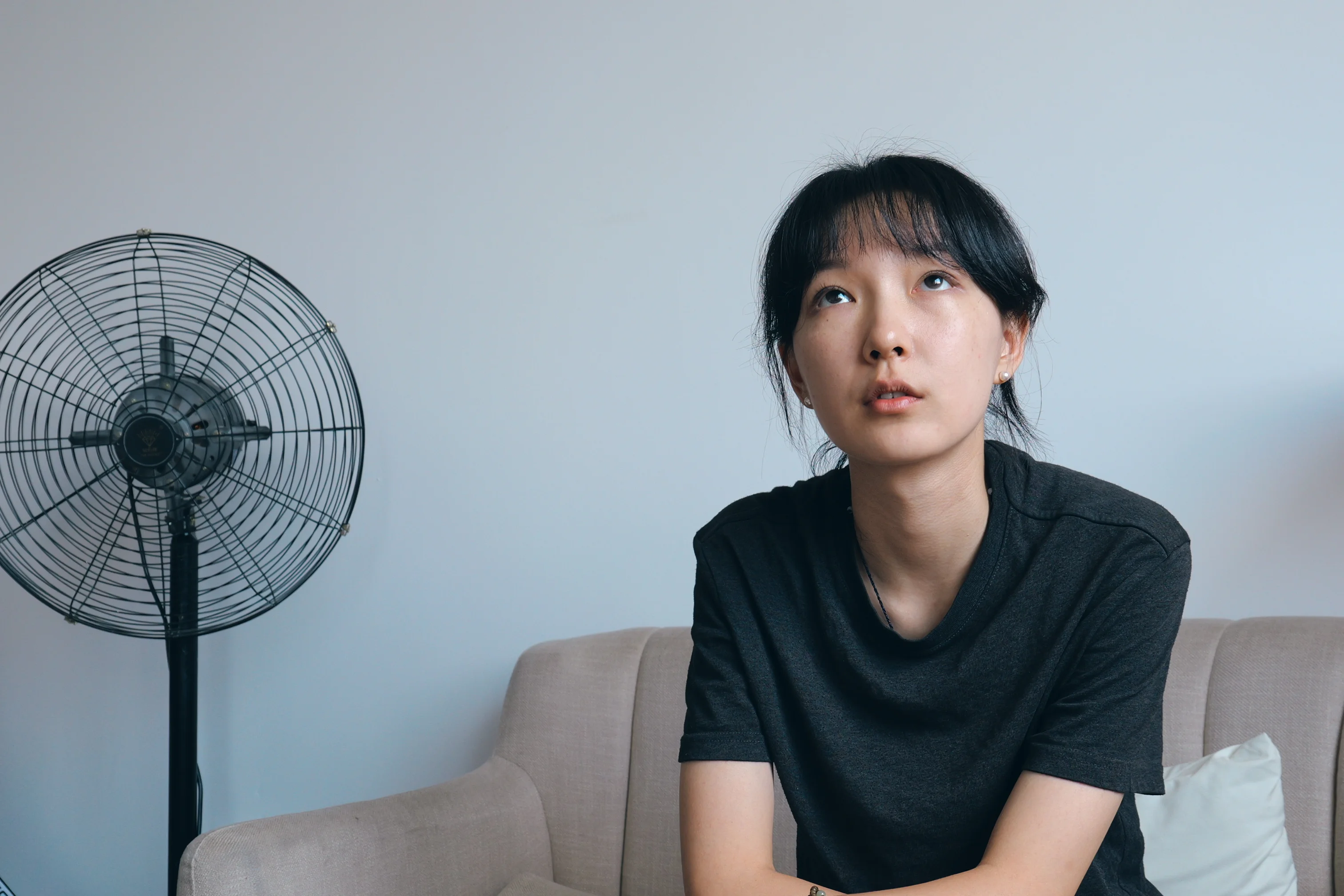
The first time we meet Xiaofan, we have dinner together at a dumpling shop in Shenzhen. Dressed in loose, plain-coloured clothes, she has a small frame, with a keyboard bag almost the size of her back strapped over her shoulders and a suitcase beside her. She gives us a small wave from within the crowd.
The way she speaks feels close to my first impression of her music: delicate and gentle, occasionally interrupted by an unexpected, wandering thought, with a subtle humanistic sensibility running through it.
The title *Not Grand Love* refers, quite literally, to a love that is not grand.
Most of the album’s eight tracks are instrumental, built around piano and synthesizer. The melodies are light and agile, weaving through dense drum patterns. Wood, forests, fire, water and grasslands appear throughout the song titles and lyrics, forming a landscape drawn from the natural world.
“I think at that time, whether in academia, everyday life or relationships, I was drawn towards these very big beliefs and ideas. But once you enter them, you realise that the ideas themselves are constantly shifting and changing, even being eroded.”
“But you still have to keep living.”
After moving to Hong Kong to pursue a PhD in anthropology, Xiaofan began recording fragments of melodies, rhythms and sounds that she happened upon while playing. As these scattered sketches accumulated, they gradually became the eight tracks that make up the album today.
Compared with those grand ideas, she found herself increasingly drawn to the ordinary, lovely little moments of everyday life. *Not Grand Love* began with these small fragments of experience and feeling.
▍The Formation of the Trio
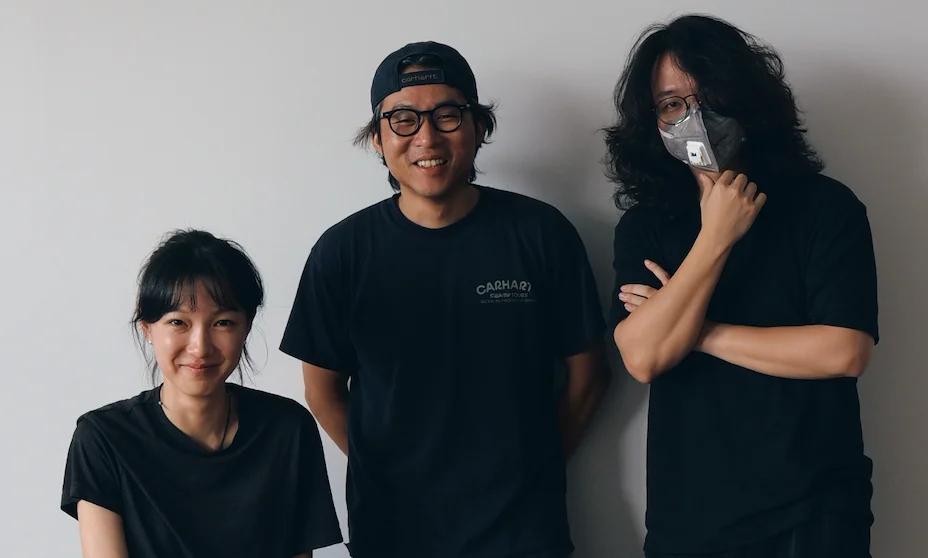
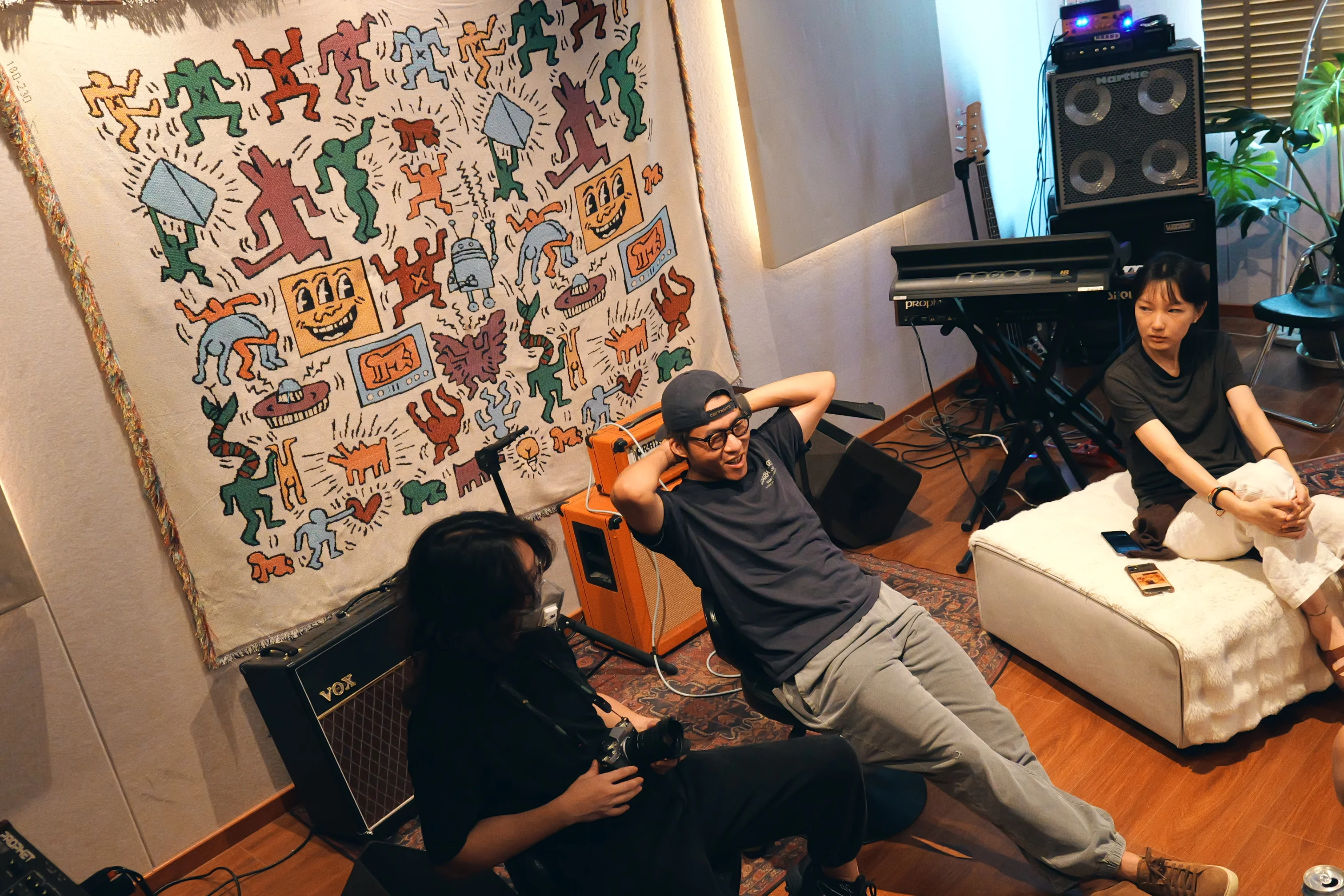
In the months following the album’s release, Xiaofan began travelling across different cities in China with drummer Zheng Haoyuan and bassist Zheng Haorong, performing as a trio in livehouses as well as less conventional spaces, including a converted Taoist temple.
There was no formal plan behind the trio’s formation.
Haorong first came across clips of Xiaofan playing on Xiaohongshu. Intrigued by what he heard, he sent her a message. He and his brother later travelled from Shenzhen to Hong Kong, where the three played together for the first time in a rehearsal room in Kennedy Town.
What drew the brothers to Xiaofan was precisely something they felt they themselves lacked.
“What’s interesting about a lot of her ideas is that they aren’t restricted by all these rules and frameworks,” Haoyuan says. “She approaches things in a much more open-ended and free way. I don’t think I’m capable of thinking like that.”
Haorong and Haoyuan both received relatively systematic musical training from a young age. The older brother, Haorong, studied pipa, while Haoyuan studied erhu; they also learned instruments including piano and drums.
During his later years of primary school and early secondary school, Haorong became fascinated by jazz, particularly its improvisational freedom. The brothers would later devote much of their time to studying and playing jazz.
Years of training gave them a strong technical foundation, but it also brought its own limitations.
“When you go through formal training and learn all these techniques, it can become a kind of cage,” Haorong says. “Sometimes, the stronger your technique becomes, the harder it is to step outside that cage and look back in.”
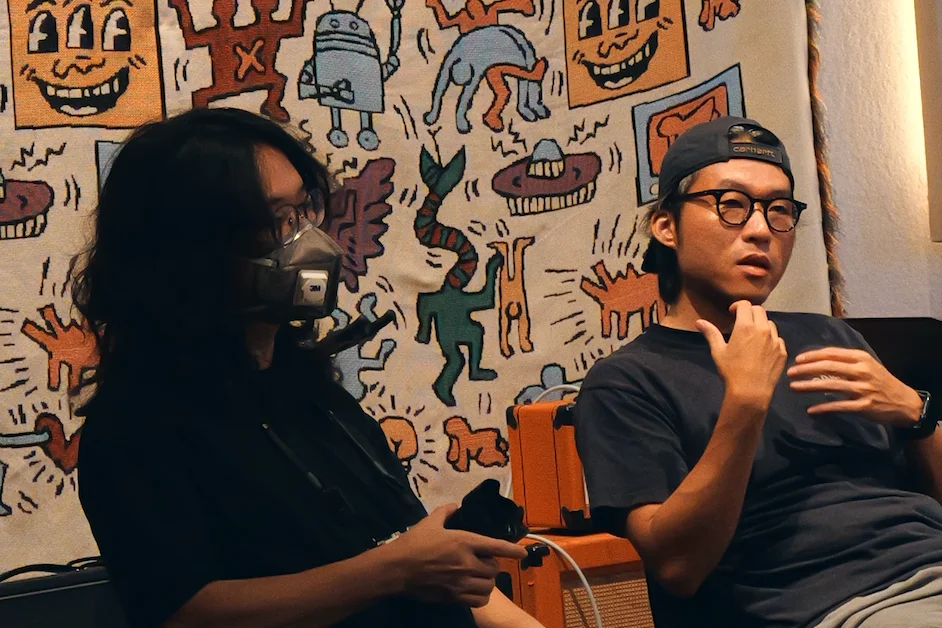
Xiaofan approaches music from almost the opposite direction.
“She isn’t constrained by whether something is harmonically right or wrong, or whether the rhythm is supposed to work in a certain way. She just turns the idea into something concrete first.”
Haorong laughs that he and his brother are instead prone to asking themselves questions like: “Is this wrong? Is there a problem with this chord? Should we make it more complicated?”
“Sometimes we just think too much.”
The influence, however, works both ways.
Xiaofan’s own music is much more precise than its sense of freedom might suggest.
“My own music is actually very tightly put together. The structure is very fixed.”
Even if her ideas do not necessarily follow conventional musical logic, she is used to deciding exactly what should happen in each section, fixing every part and every sound in place.
Playing with the other two gave her a different experience. Music that had previously been determined piece by piece by one person now had to leave room for someone else to respond. A section that had once been fixed could shift because of something another musician did in the moment.
“It made me realise again that music really is a process of communication.”
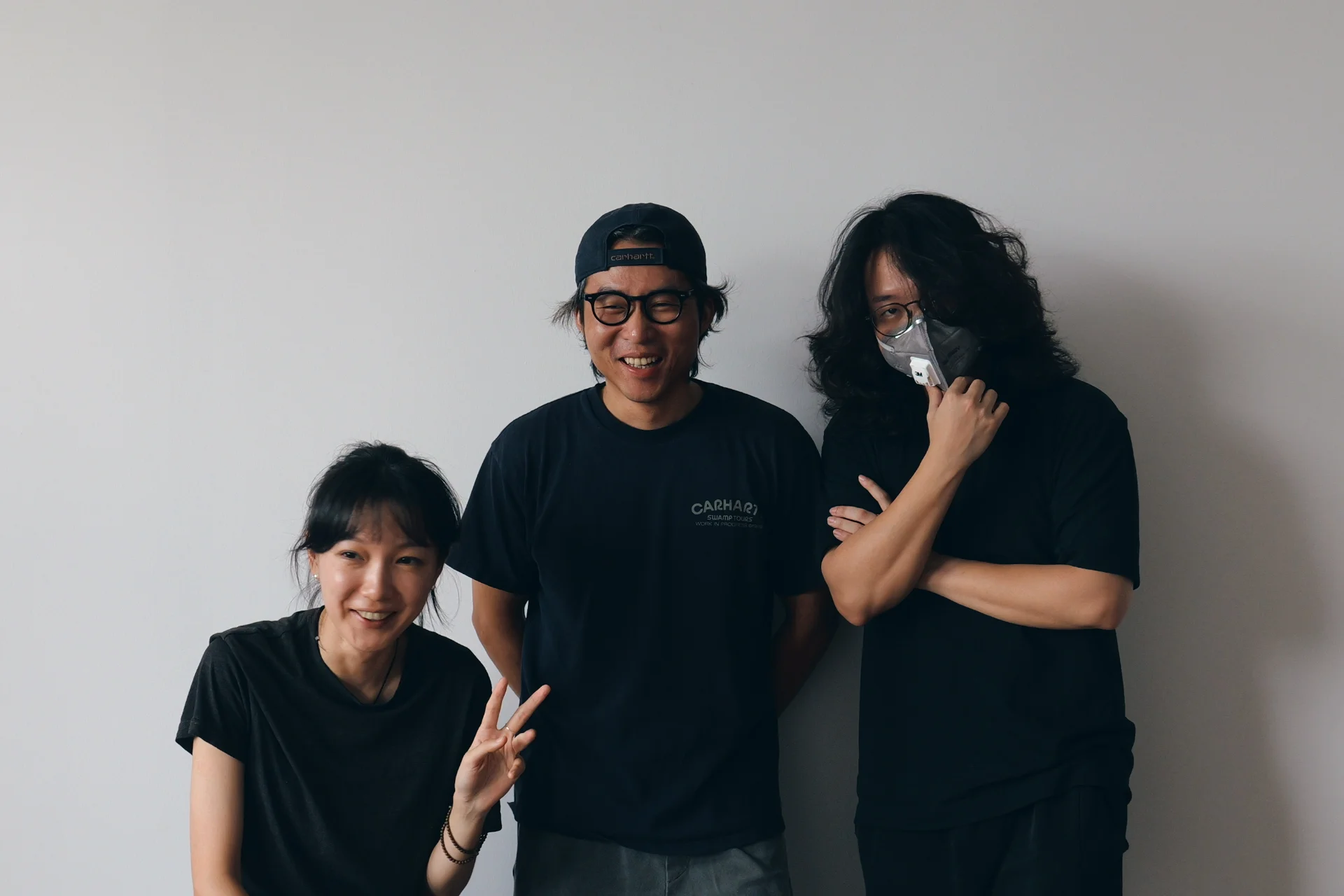
Since returning from tour, the three have already begun writing new material together. Xiaofan describes the new songs as “more structured, and more direct” than her earlier work. The low end introduced by Haorong’s bass has also opened up another layer between the drums and piano, allowing the instruments to push and respond to one another in new ways.
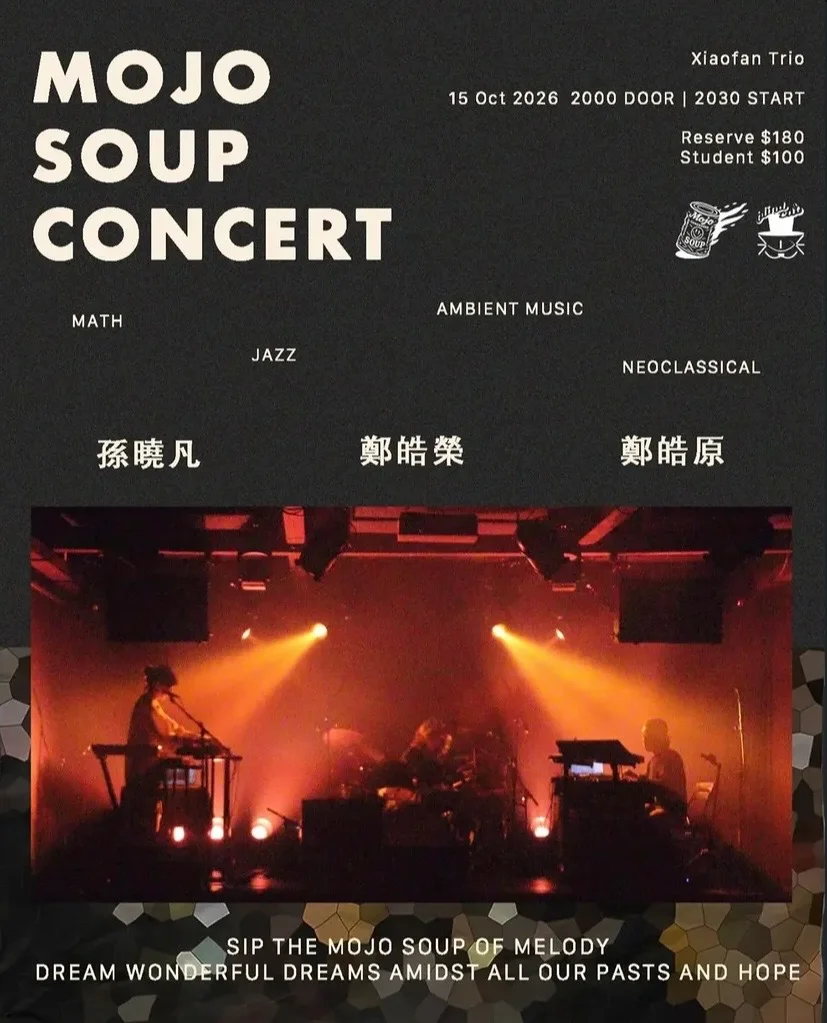
On 15 October, Xiaofan Trio will perform at MoJo Soup Concert. Alongside tracks from *Not Grand Love*, the trio will also play new material they have been developing together.
From the recording of the album to where they are now, the trio’s sound is still shifting. This performance will mark another stop along the way, capturing one stage in that ongoing evolution.
MoJo Soup Concert #64 — Xiaofan Trio
Date: 15 October 2026 (Thursday)
Doors: 8:00 PM|Show: 8:30 PM
Venue: MoJo Soup, Kowloon
Tickets: HK$180|Students HK$100